



AI Can Help Predict Food Crises, but Experts Advise Caution
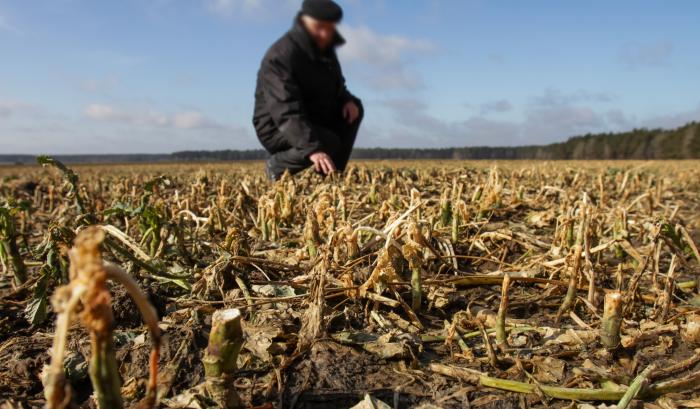
UMD researchers warn that relying on algorithms alone to forecast famine risks costly errors in conflict zones and data-poor regions.
As humanitarian aid budgets shrink and AI capabilities rapidly advance, artificial intelligence is increasingly seen as a fast, cost-effective way to forecast where food insecurity may emerge. But an international team of experts is urging aid organizations to use AI selectively and keep human experts in the loop.
In a new commentary published in Nature Food, geographical scientists at the University of Maryland and colleagues describe how AI and machine learning can help collect and analyze the vast amounts of information used to monitor food security, from satellite imagery and crop data to market prices and conflict reports. But they caution that AI models can struggle in data-poor environments, miss new threats, and fail to recognize unreliable or manipulated information.
Weston Anderson, the commentary’s lead author and an assistant research professor in UMD’s Department of Geographical Sciences (GEOG), said the warning comes as humanitarian organizations face growing pressure to use AI to reduce costs.
“Over the past year and a half, funding for humanitarian aid has been cut repeatedly, putting tremendous pressure on food security early warning systems to use machine learning and artificial intelligence to reduce costs,” Anderson said. “During this time, the capabilities of AI have dramatically increased. This presents both an opportunity and a potential pitfall for acute food security early warning systems.”
Read More of Renata Johnson's Article on the GEOG Website
Photo by Vital via Adobe Stock
Published on Thu, Aug 27, 2026 - 10:57AM