

Center for Auditory System Research Celebrates 32
The Center for Comparative and Evolutionary Biology of Hearing Receives Another T32 Training Grant, During its 32nd Year
The training grant that has allowed the University of Maryland’s Center for Comparative and Evolutionary Biology of Hearing (C-CEBH) to support a multitude of pre- and post-doctoral students during the past 32 years received another renewal. This vote of confidence ushers the center into its next decade of impact on the world’s understanding of the auditory systems of humans—and other animal species.
The center has to reapply for the Institutional National Research Service Award (T32) from the National Institute of Health’s (NIH) National Institute on Deafness and Other Communication Disorders (NIDCD) every five years in order to be able to support four pre-doctoral students and three post-doctoral students over the course of two years. Getting the grant is no easy feat: The C-CEBH’s T32 is one of only two such grants on the University of Maryland, College Park (UMDCP) campus.
The C-CEBH’s T32 is also UMDCP’s longest running T32 grant.
“The reason we have been awarded the grant is because we have a critical mass of faculty who study hearing and auditory neuroscience, and we are the only place in the nation, and perhaps the world, that applies a comparative evolutionary biology approach, which means that we make comparisons across different animals, and learn about hearing through how the animals differ, and how they have evolved,” Matthew Goupell, co-director of the C-CEBH and a professor in UMD’s Department of Hearing and Speech Sciences, said. “The training grant adds an additional and very significant level of training and support for the students in the labs above and beyond what they already do, allowing students to take projects in their own direction, and allowing the faculty to train the next generation of hearing scientists and auditory neuroscientists.”
C-CEBH researchers and students from academic units across campus study hearing in a variety of species—including ferrets, gerbils, birds, reptiles and more—at the individual neural level, which is incredibly difficult to do in humans.
“You can measure the electrical and magnetic fields generated by a group of neurons in a human through electrophysiology—EEG, MRI, those techniques—but those show what’s happening with a group of neurons versus a single neuron,” Goupell explained.
In addition to conducting studies that seek to fill in the gaps in our understanding of the neuroscience behind hearing in humans, trainees of the center take specific classes on hearing and evolution, are presented with professional development opportunities, and network with center partners at NIH, NIDCD, and more via meetings and conferences that the center hosts.
“Receiving the first-ever CEBH fellowship in 1994 provided me with the support I needed to explore the development of the inner ear of fish, and the continuous production of sensory cells. This led me to a postdoc at Georgetown and NIDCD, and eventually back home to UMD,” said Pamela Lanford, the Director of Research Operations Innovation & Office of Animal Research Compliance in the University of Maryland’s Division of Research. “My current position involves ensuring the ethical and humane treatment of animals in research, and my broad experience with a variety of species, along with the scope of research in our department and the support of the CEBH fellowship, have enabled me to be tuned into needs and requirements of our highly diverse animal research program, and to support our investigators in their pursuits. I greatly appreciate the opportunities that the CEBH fellowship provided, especially in terms of the exposure to excellent faculty, including Catherine Carr, a core member of the CEBH team and the chair of the Institutional Animal Care and Use committee these last several years.”
Carr currently co-directs the C-CEBH with Goupell. Lanford’s then-advisor, UMD Department of Biology Professor Emeritus Arthur Popper, co-founded the center alongside Robert Dooling, a professor emeritus of the Department of Psychology.
“Hearing is not just human—all vertebrates and many invertebrates hear—and the argument we made is that understanding how other animals hear can help us understand how we hear,” Popper recalled of the center’s origin story. “The questions you can ask of a bird or a fish or whatever animal you’re dealing with are highly relevant to understanding human hearing without doing experiments on humans, and those questions really give us insight into how our hearing may have evolved.”
During his time at UMD, Popper studied fish and their ability to regenerate the cells that are responsible for hearing; cells that just die off in humans over time, resulting in hearing loss. He also created and taught a research ethics class with Dooling, as it was a requirement for the center’s trainees.
“Of all the courses I taught, that was the most fun because we interacted with really smart students,” he said. “I think the students got a lot out of it too, because it forced them to think about how to do science, how to deal with animals, and the philosophical issues of doing science. I hope it impacted the students, because I know it impacted us.”
Between the courses taken, research conducted, and mentorship received, the center has, indeed, had an impact on its trainees.
“I was supported by CCEBH as a postdoctoral trainee in the late 1990s, under the mentorship of Shihab Shamma and in his lab,” said Jonathan Simon, a professor in UMD’s Department of Electrical and Computer Engineering. “The training grant was extremely valuable to me, as it was the first time I learned how to navigate the seeking of, and acquiring, research funding from NIH. By 2001 I had applied for, and was awarded, my first NIH research grant, an R03. Almost 30 years later, I am now associate director of C-CEBH.”
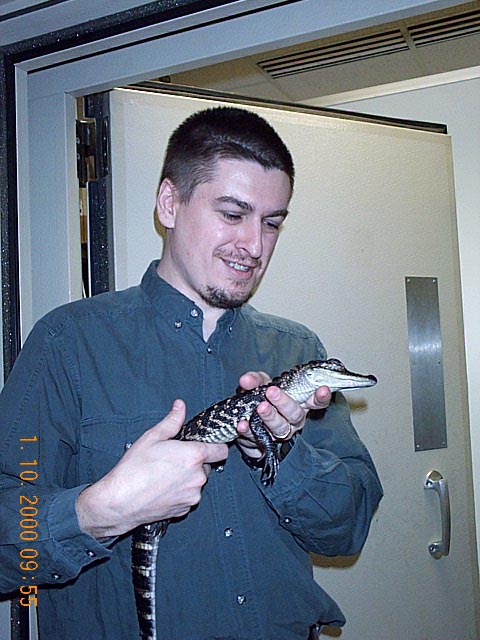
Another one of Popper’s former students, associate professor of biomedical sciences at Creighton University Allison Coffin, noted the center’s impact on her career as well.
“C-CEBH provided a strong foundation in comparative hearing that has defined my career,” added Coffin, who graduated with her Ph.D. in Biology from UMD in 2005. “My lab studies cellular mechanisms of hearing loss and how both internal and external factors impact hearing. We use a variety of animal models, including zebrafish, plainfin midshipman fish, bats, and mice, letting the research question drive our choice of species. Without CEBH, my research would be limited to a few ‘typical’ animal models, with less impact to address critical questions in hearing.”
Maureen Shader, who graduated with her Ph.D. in Hearing and Speech Sciences from UMD in 2019 and is currently an assistant professor in Purdue University’s Department of Speech, Language, and Hearing Sciences, had similar takeaways from her time with the C-CEBH.
“Being a C-CEBH T32 trainee at UMD was my first opportunity to learn about cross-disciplinary auditory neuroscience,” she said. “I had opportunities to learn from faculty and other trainees who taught me how to ask better questions by looking across species and disciplines. It was an invaluable part of my development as a researcher.”
The center’s current trainees, which include Marissa Renee, are already experiencing the same impact that the center has had on the generations that have gone before them.
“The T32 has been instrumental in the development of my current work and helping me think about my future steps; our professional development seminars help me think strategically, and the classes required by the program broaden my knowledge and expose me to new intriguing concepts that I may want to explore in the future,” said Renee, a second-year doctoral student in the Neuroscience and Cognitive Science program who is studying auditory perception and neural plasticity in the extracellular matrix.
Renee hopes to pursue a postdoctoral position and start her own research lab one day.
“One of the outcomes that we get measured on every five years is how many of our trainees are still doing science in our field; they could be a professor with their own lab at a university, or at places like NIH,” Goupell said. “Our trainees have met that metric repeatedly over the years, and I hope that the center continues to inspire students to work to advance auditory science for many more decades to come.”
Learn more about the Center for Comparative and Evolutionary Biology of Hearing
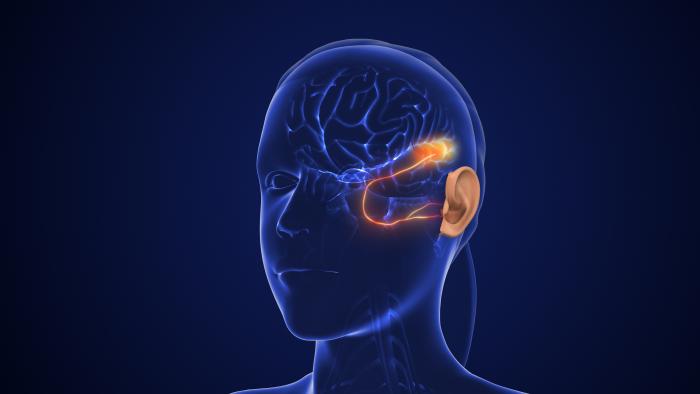
Photo by iStock
Published on Mon, Jun 1, 2026 - 1:41PM