Honors Global Challenges & Solutions Program Takes Students to Panama and Brazil
The Honors College’s HGLO Program Led Students on Not One, but Two Study Abroad Programs in 2026
The University of Maryland Honors College’s Honors Global Challenges & Solutions (HGLO) program hosted two education abroad opportunities in 2026—the first time the program has offered two such travel opportunities to students within the same year.
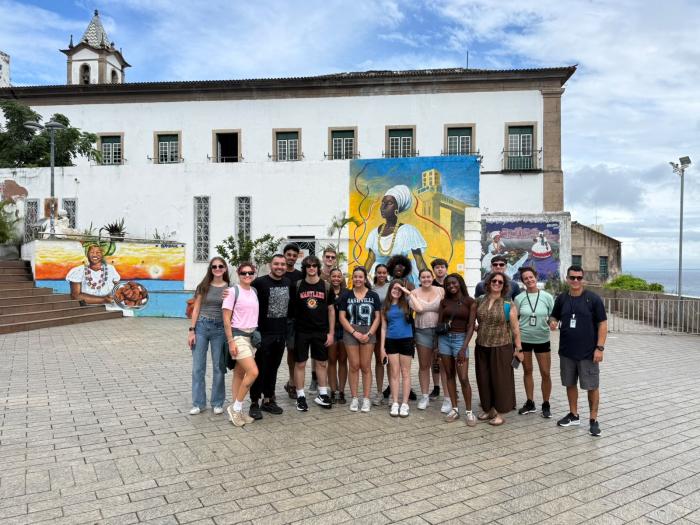
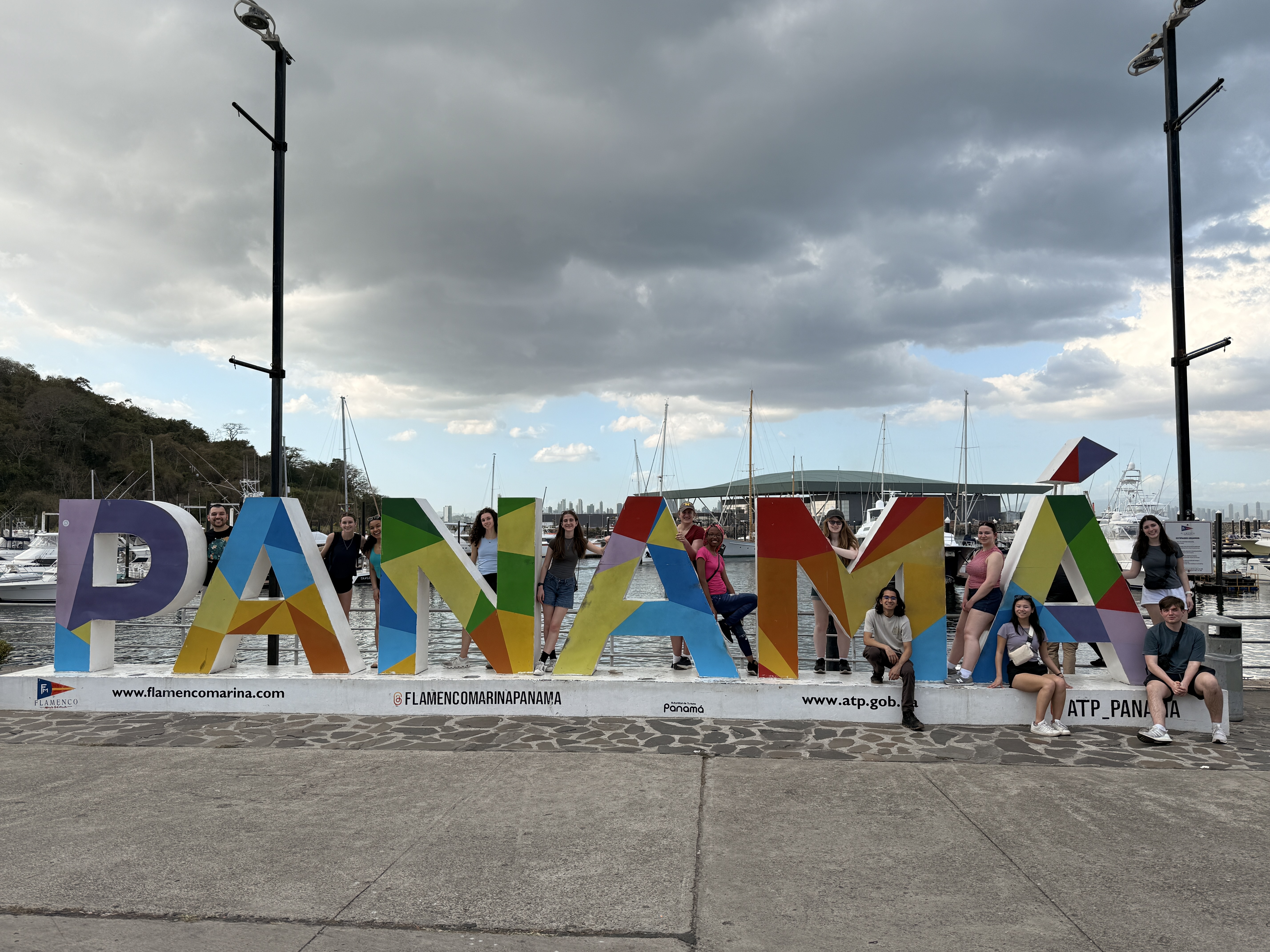
During spring break, HGLO took 11 students to Panama on one of the most affordable education abroad programs at UMD. Then, for two weeks during the summer, HGLO took 13 students to Brazil, its first program in the area.
HGLO Program Manager and Instructor Alfredo Oliveira led the charge on both programs—thanks in part to a RISE Grant from the UMD Division of Academic Affairs that allowed him to travel to Panama in 2024 to investigate what an education abroad trip there could look like.
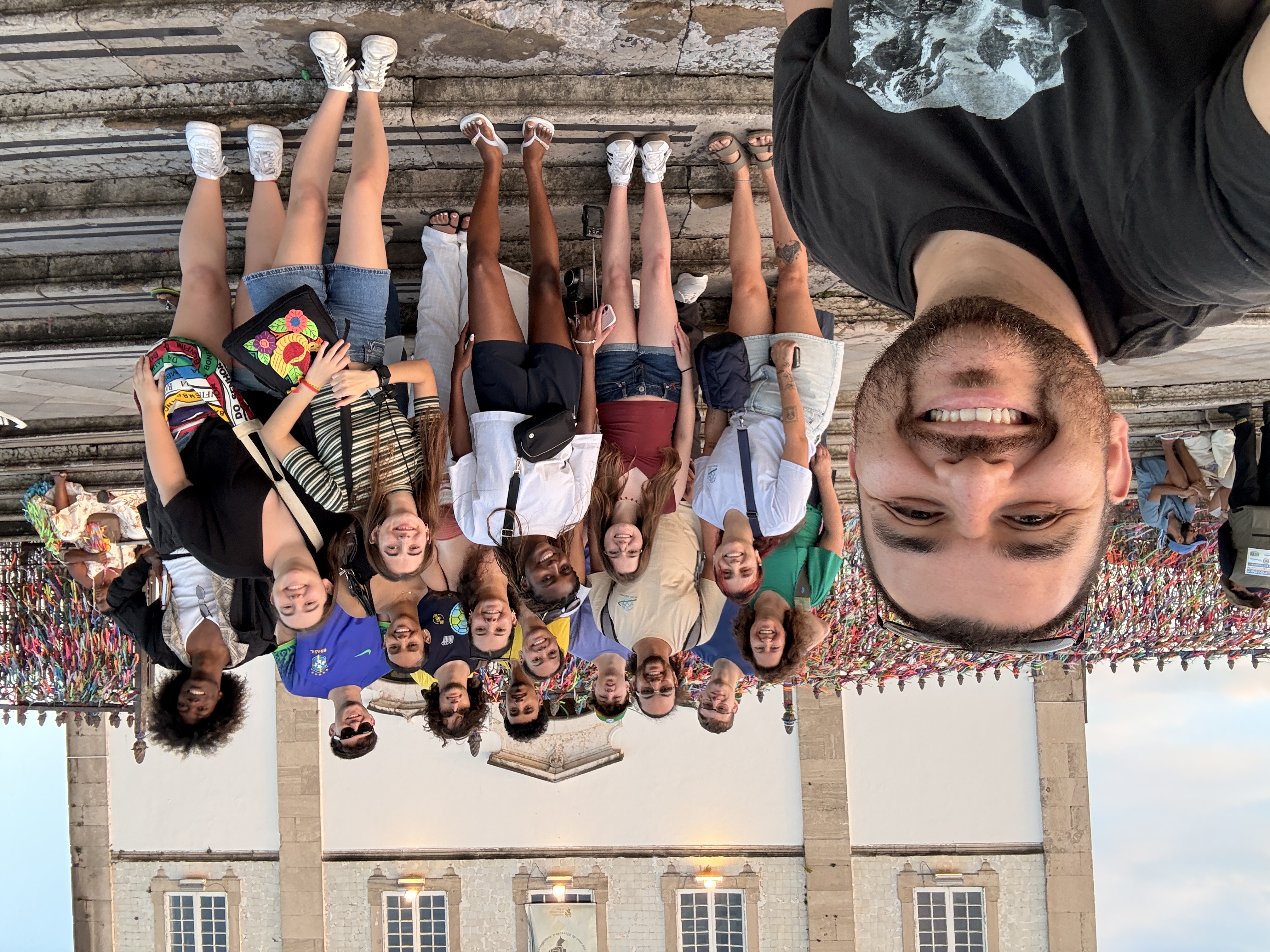
HGLO Director and Department of Government and Politics Professor Sarah Croco offered her support on the Panama trip, and HGLO Associate Director Natalie Vinski Ibrahim helped spearhead the Brazil trip.
“These programs are a crucial part of our living-learning program’s mission, which is globally-oriented and inherently multidisciplinary,” Croco said. “Both of these trips have afforded opportunities to explore a huge range of topics including international trade, public health, biodiversity, education policy, and the rights of indigenous communities.”
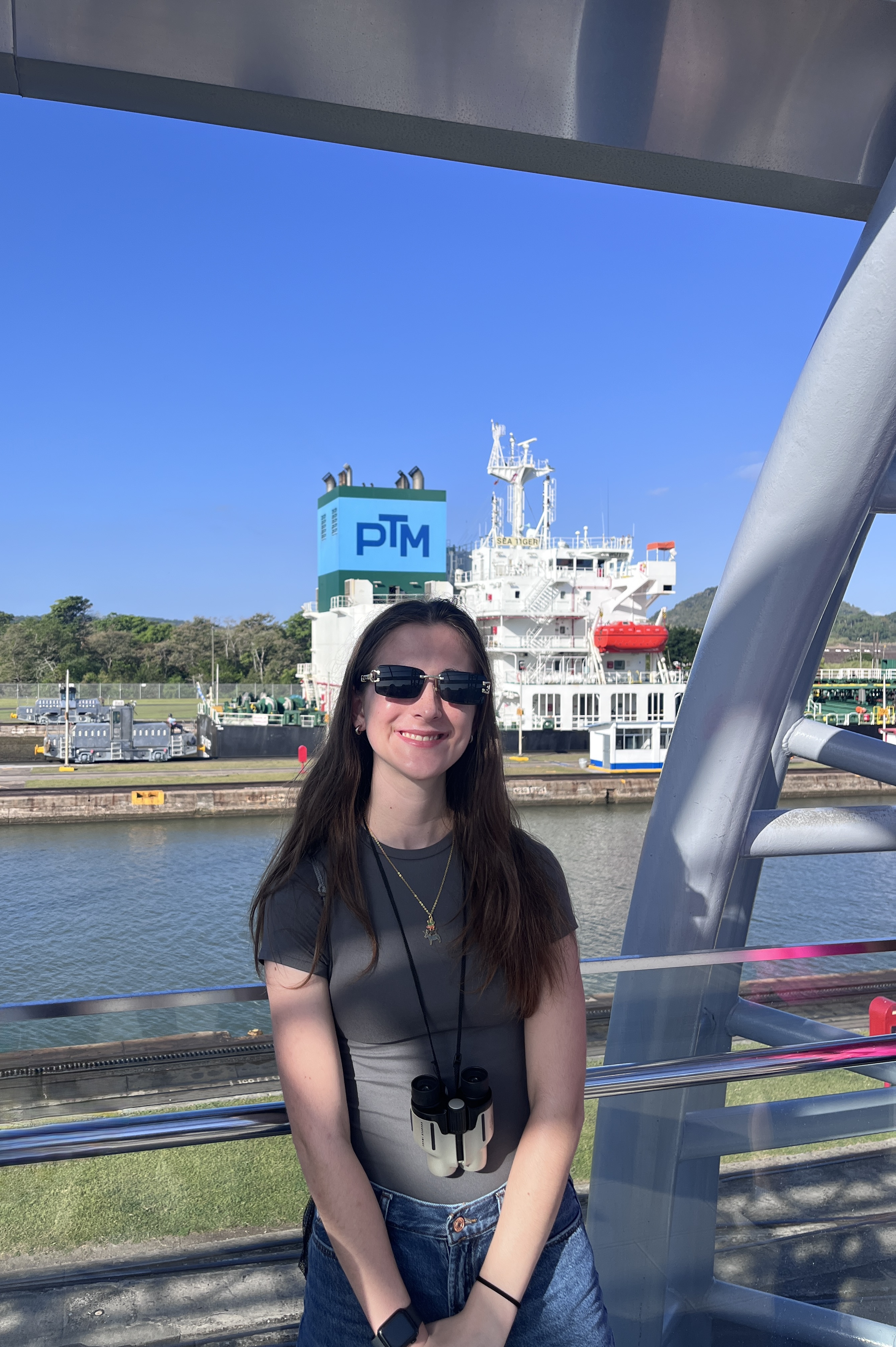
The 2026 spring break program in Panama—the second iteration of the trip—took students to visit the Panama Canal, the City of Knowledge, the National Metropolitan Park, and more. Students also got to participate in a Panamanian cooking class, a chocolate candy bar making opportunity, and go on a canoe ride to the Emberá Purú Biakirú Community, an indigenous community that lives along the Chagres River.
“The most impactful part of the Panama trip was giving the Emberá children the school supplies that we brought,” said Brianan Teal, a junior psychology and government and politics double major who went on both trips. “The kids immediately started distributing the supplies and choosing what they wanted, which was really heartwarming and showed they appreciated our efforts.”
Indigenous rights and educational disparities were two of the social issues that students explored in Panama; others included HIV prevention and reduction, and the relationship between Panama and the United States.
In Brazil, students got to see educational disparities through another lens, as well as disparities caused by race, geography and socioeconomic status.
They saw Oliveira through a new lens, too; he grew up in Brazil, and his old high school was one of the stops the group made during their time there.
“It was so rewarding to take students to Brazil and share some of my culture with them,” he said. “I think that often in study abroad programs, the faculty have no connection to the country, just an interest or some knowledge of the country. But when you go abroad with someone who is from that country, and they’re an instructor in your class, it’s exponentially more rewarding.”
In Brazil, students toured the Marcílio Dias Soccer Stadium; got to learn about local educational initiatives at the Parque Dom Bosco community center; participated in music-making, dancing, and sustainable candle-making workshops; explored the historic medieval-style castle Castelo Garcia D’Ávila and learned about slavery in Brazil; and more.
“I can’t say enough how well planned and executed these trips are. We always get comments from students saying how these trips are so fun, everything is planned to a tee, and everything goes smoothly,” Croco said.
Oliveira makes sure that the study abroad programs he plans give students ample memorable experiences during their time abroad for the most affordable price, often negotiating pricing with vendors in order to do so.
“For a long time, in the field of education abroad, it was thought that ‘Oh, you're not having a real experience unless you go for a full semester.’ But these short-term, faculty-led programs have so much value; they’re shorter, so they fit more student schedules, they're more affordable, which is better for the students, and the part that I think gets overlooked is the ability for students to have real connections with faculty,” Vinski Ibrahim said. “Especially if they are an insider like Fredo, students get this insight that only they can give, and that’s really special.”
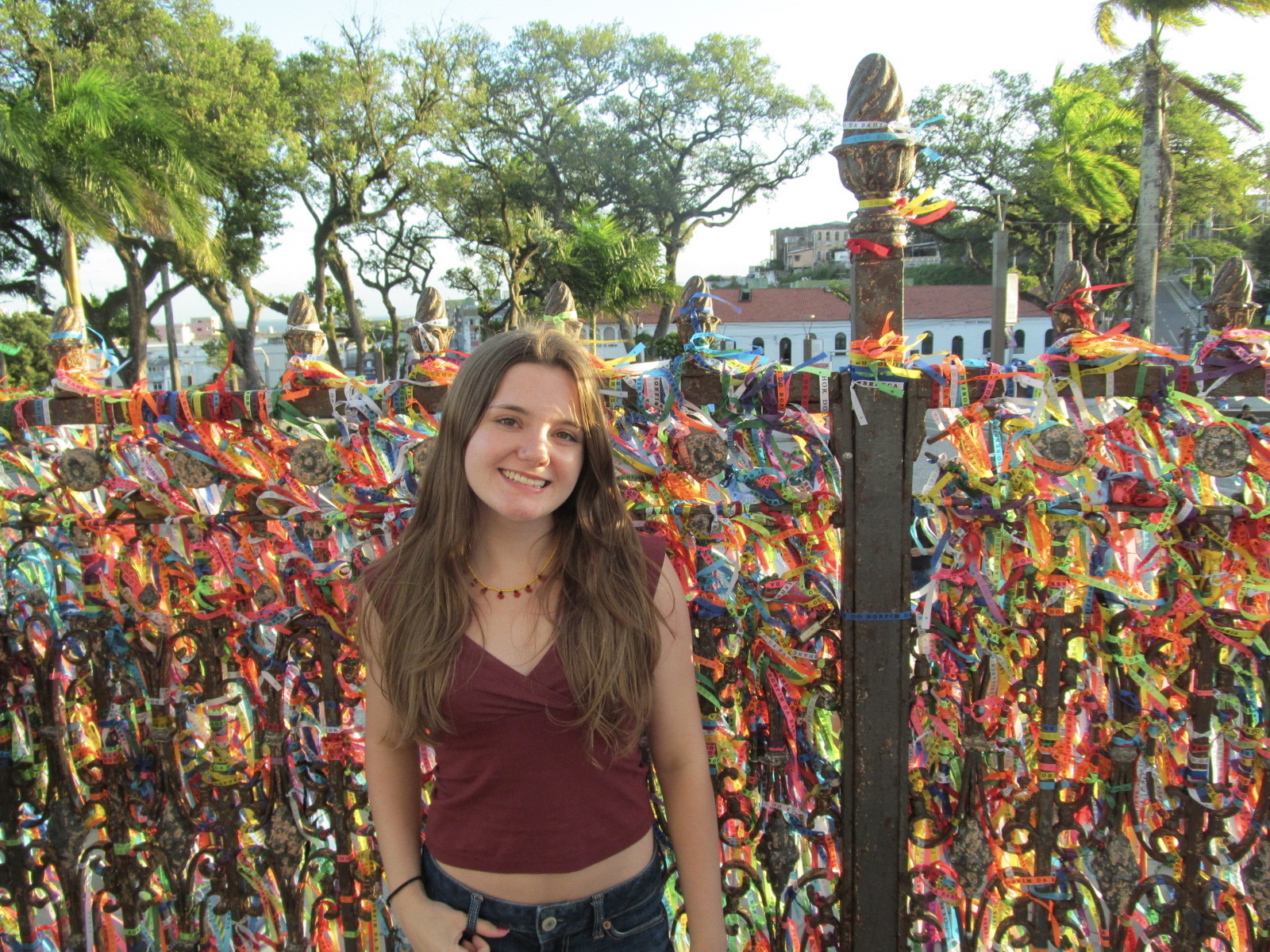
Kathryn Daniel, a sophomore international relations and German studies double major who also participated in both of HGLO’s 2026 study abroad programs, would agree.
“As someone who hopes to go into the international relations field, I believe it is very important for me to be educated and aware of the many unique countries, cultures, and issues I share this world with, and through deepening my knowledge of Brazil and Panama while abroad, both HGLO programs certainly helped me in regard to my future career endeavors,” she said.
Looking to the future, HGLO plans to alternate between offering either the Panama spring break program or the Brazil summer program each year. HGLO also plans to host a trip to Thailand from June 16, 2027 to July 31, 2027, a six-week program in Bangkok in which students will complete an internship and take a weekly seminar course.
“Students won’t remember every single thing they did when they studied abroad. They will remember the connections they made, and the moments they lived,” Oliveira said. “For me, that might be what makes study aboard programs the most valuable; students becoming self-aware, reflective, and being caring toward each other.”
Read More about UMD Terps in Panama
Read More about UMD Terps in Brazil
Read More about the Global Internship+
Published on Tue, Aug 18, 2026 - 9:41AM