


New Book Shows Rising Liberal Values in the Middle East
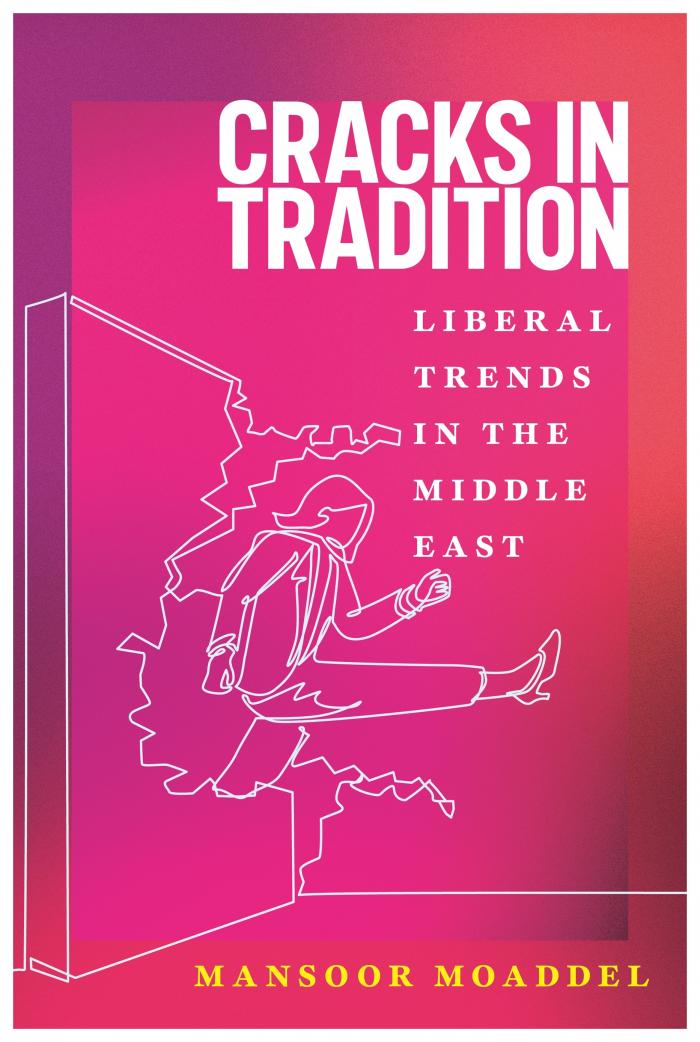
In an enlightening new book, Professor of Sociology Mansoor Moaddel documents a marked rise of liberal values among Middle Eastern nations. Moaddel brings an extraordinary amount of research to “Cracks in Tradition: Liberal Trends in the Middle East” (Columbia University Press, 2026). The work features findings from more than 70,000 in-person interviews and qualitative insights from numerous Middle Eastern countries.
In this book, Moaddel challenges conventional wisdom and outdated beliefs about the peoples of Middle Eastern countries, and offers a fresh perspective on their values, perspective and priorities. Remarkably, Moaddel notes that oppression and rigidity has provided a catalyst for liberal change in the Middle East.
“The strongest motivator [of increasing liberal values] is the experience of religious domination itself. This may sound counterintuitive, given that the period since the 1979 Iranian Revolution, which has now stretched to nearly half a century, has been the darkest episode in the history of modern Middle East. It is marked by religious violence, authoritarian rule, male supremacy, and the subjugation of women. But this history has produced a powerful reaction against the order that generated it,” Moaddel said. “The key is that ideas acquire meaning through their engagement with opposing ideas.”
In many ways, the rise of liberal attitudes arises organically as a “pendulum swing” from the control and strict oversight of authoritarianism.
“Liberalism can emerge organically as an opposition to religious domination rather than as an import from the West,” Moaddel said.
The book outlines empirical evidence from multiple countries—including Egypt, Iraq, Iran, Israel, Jordan, Lebanon, Pakistan, Saudi Arabia, Tunisia, and Turkiye, but the main focus of book is on Egypt, Iraq, Iran, Saudi Arabia, Tunisia, and Turkiye, where it shows a broad movement toward liberal values across three dimensions: expressive individualism, gender equality, and secular politics. Tunisia, however, showed a reverse trend toward secular authoritarianism between 2016 and 2020, after a remarkable shift toward liberal values in 2013-2016.
Moaddel started survey research in the Middle East in 1999, and has conducted more than 30 national values surveys in 10 countries. Moaddel paid local survey research firms in these countries to carry out these surveys. His research has been supported by grants from entities including the National Science Foundation and the Office of Naval Research.
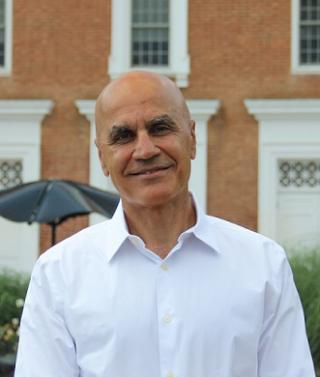 Moaddel’s research team in the United States, which was mostly located at the Institute for Social Research at the University of Michigan, supervised most of these surveys.
It is because of this vast and unique body of data and findings that Moaddel’s book stands apart, and teaches us so much about the changing Middle East.
“The media and the public at large have gotten used to thinking of the Middle East as ‘a lost cause’—many see it as a land of authoritarianism, political violence, and religious fundamentalism. That is not true, and as a matter of fact, liberal attitudes have emerged in opposition to those things that happened in the past almost forty years, or fifty years,” Moaddel said.
Among many key findings in the book, it is notable that women are at the vanguard of many significant changes in thought, values and policy in the Middle East, Moaddel said.
“Women have played a particularly important leadership role in this rebellion. The struggle is not only over who governs, but over whether individuals have the freedom to determine how they live, what they believe, how they express themselves, and even how they dress. It is therefore a struggle for political freedom, social freedom, and bodily autonomy,” Moaddel said. “The changes are real, measurable, and increasingly visible. Iran is perhaps the most dramatic example. Iranians have demonstrated these changing values not simply through surveys or political discourse, but through their lives—by protesting, refusing compulsory veiling, challenging religious authority, and accepting extraordinary personal risks in the pursuit of freedom.”
Moaddel said these changes toward more liberal attitudes in the Middle East have been developing for decades, movement to movement, moment to moment, saying the pace of these changes is best described as “a slow accumulation followed by sudden acceleration.”
“A remarkable feature of the spread of an idea is its similarity to the spread of a pandemic: it begins very slowly, here and there, and then, like a wildfire, suddenly spreads from one individual to another, one community to the next, and from one or two countries to an entire region. The emergence of liberalism in the Middle East has followed a similar pattern. It has been neither uniform nor linear; it has accelerated when people’s attempts to reform existing institutions have failed and opposition has shifted toward challenging their underlying principles,” Moaddel said.
Ultimately, Moaddel said he hopes that readers will gain from the book an understanding that profound changes are occurring in the Middle East, and that we should not mistake the persistence of authoritarian and religious regimes for the persistence of the values they claim to represent.
“Middle Eastern publics are increasingly rebelling against religious fundamentalism and demanding political and social freedom, religious pluralism, gender equality, and freedom over their own bodies,” Moaddel said.
The larger lesson, he asserts, is that liberalism should not be understood as “a Western doctrine waiting to be imported into the Middle East.”
Looking ahead, Moaddel is now focused on another book project, “The Middle East in the Age of Divine Decadence,” which examines the social and spiritual consequences of mixing religion and politics, and provides empirical evidence of how oppressive religious regimes transform both society and religion itself.
In some ways, the two books are closely connected. “Divine Decadence” examines how the fusion of religion and politics produces religious and moral degradation.
“For me, the divine is transcendence—the ultimate source of spiritual fulfillment. Yet when religion becomes entangled with politics, the divine undergoes a profound transformation: it is stripped of its mystery and reduced to an instrument of worldly power,” Moaddel said. “Religion becomes a vehicle of subjugation, as an institution—or worse, a single individual—claims exclusive authority over the sacred; decoration—vanity, flamboyance, and ornamentation—replaces the spiritual substance of symbols, sacred objects, and material practices; and the sacred itself is appropriated by rulers, movements, or clerics who bestow upon themselves the status of the living embodiment of the divine will. The outcome is a refined corruption of the divine—a condition of divine decadence.
“The present book asks what happens on the other side of that process—how the experience of such degradation can generate a demand for individual freedom, religious pluralism, and the separation of religion from politics.”
Cover image courtesy of Columbia University Press
Published on Thu, Sep 10, 2026 - 10:15AM