


PROGRESS Awards $300K to UMD-Led Gun Violence Research Efforts
The University of Maryland’s Prevent Gun Violence: Research, Empowerment, Strategies & Solutions (PROGRESS) Initiative recently provided approximately $300,000 in total to seven gun violence-focused research projects. The grants will fund the research efforts through May 31, 2027.
“PROGRESS is excited about its 2026 challenge grant recipients; these projects will support and accelerate ongoing PROGRESS research and also launch new avenues of inquiry to reduce and prevent gun violence in the National Capital Region, Maryland and beyond,” said African American and Africana studies and anthropology Professor Joseph Richardson, co-director of PROGRESS alongside Woodie Kessel, a professor of the practice in UMD’s School of Public Health. “We look forward to working with this outstanding group of researchers.”
Learn more about the projects PROGRESS selected to fund:
Empower Youth Academy: Building Skills, Character & Resilience
This project will establish the Empower Youth Academy (EYA), and test its feasibility and preliminary effectiveness through a school- and community-embedded prevention initiative targeting racially and ethnically diverse youth. EYA directly responds to the need for establishing a youth academy for high-risk youth by creating a school-community prevention model that combines mentoring, AI/media literacy, conflict resolution, character development, and trauma-informed skill-building. EYA integrates: (1) the Bullying Literature Project, a classroom-based bullying prevention intervention developed by PI Wang currently being implemented in Prince George’s County Public Schools to reduce bullying perpetration, positive bystander action, empathy, and emotional regulation; and (2) Trauma-Informed Social-Emotional Learning Workshops, a structured skills-building program for middle and high school students, designed to create psychological safety and stability before and alongside cultivating life skills, building character, and fostering resilience through collaboration with local organizations.
Principal Investigator: Cixin Wang, Associate Professor, College of Education
Exploring the Frontiers of Technology and Data Analytics for Community Violence Intervention (CVI)
The overall goal of this project is to synthesize knowledge about CVI and technologies, including their current use, needs, challenges, and future opportunities that can impact Maryland county partners, and to develop technology blueprints for tool design and integration. The three objectives include: 1) review existing documents, reports, and literature on technology use among CVI organizations; 2) engage with CVI partners and initiatives to conduct a needs assessment and examine legal and operational frameworks; and 3) develop a blueprint of a predictive tool that can be integrated with existing CVI technology platforms.
Principal Investigator: Shuvra Bhattacharyya, Professor, A. James Clark School of Engineering
From Hotspots to Help-Spots: An AI-enabled, Community-centered Risk-resource Mapping
This project will focus on Baltimore City and/or Prince George’s County, with the final study site selected in consultation with researchers and community partners. The project’s central contribution will be the integration of two complementary geospatial frameworks: risk terrain and resource terrain. The risk terrain layer will identify places where firearm violence risk may be elevated based on spatial, environmental, social, and temporal indicators, such as prior shootings, vacant properties, limited lighting, transportation corridors, housing instability, alcohol outlets, commercial activity nodes, and other built-environment or neighborhood conditions (Brantingham & Brantingham, 1995; Caplan & Kennedy, 2016; Kennedy et al., 2011). The resource terrain layer will identify places where prevention capacity already exists or could be strengthened, including community violence intervention programs, schools, libraries, recreation centers, faith institutions, small businesses, health providers, youth-serving programs, neighborhood associations, and trusted informal leaders.
Principal Investigator: Kunpeng Zhang, Associate Professor, Robert H. Smith School of Business
Integrating Mobile Device Location Datasets and GeoAI in The Digital Neighborhood for Community Violence Intervention
This project introduces a massive, previously untapped dataset into local violence prevention: Mobile Device Location Datasets. We will acquire anonymized, time-stamped Origin-Destination data sourced from aggregated smartphone location-based services. This dataset captures millions of localized spatial trajectories annually within the NCR. Unlike census data, which tells us who sleeps in Ward 7, this mobility dataset reveals:
- Volumetric Flow: How many people are traversing specific commercial corridors hour-by-hour.
- Dwell Time: The duration individuals spend lingering at specific non-residential nodes, such as transit hubs, convenience stores, or parks.
- Catchment Areas: The geographic origins of the people gathering in a specific Ward 7 micro-place.
By layering this massive mobility dataset over District of Columbia Ward 7's built environment, we propose a methodological paradigm shift: the construction of a "Digital Neighborhood" to map the dynamic “activity spaces” where people actually spend their time.
Principal Investigator: Mengxue Li, Principal Faculty Specialist, College of Behavioral & Social Sciences
Leveraging Imagery Intelligence and GeoAI for Structural Violence Intervention: A Digital Neighborhood Framework
This project will create a “Digital Neighborhood”—an advanced, high-resolution DigitalTwin framework. By utilizing multi-modal satellite imagery and Geospatial Artificial Intelligence (GeoAI) to map physical vulnerabilities at the micro-place level, this research will create a rigorous simulation environment. This platform will enable researchers and civic leaders to test how selected infrastructure improvements can proactively disrupt the environmental catalysts of violence, shifting the burden of prevention from law enforcement to structural civic remediation.
Principal Investigator: Ruibo Han, Principal Lecturer, College of Behavioral & Social Sciences
PlaceHack Maryland: Designing Safer Communities Through Youth-Led, Place-Based Innovation
This project proposes PlaceHack Maryland, an interdisciplinary, student-led design challenge that engages University of Maryland undergraduate students in developing innovative, evidence-based solutions to place-based contributors of violence and community insecurity. Through collaboration with community stakeholders, participants will apply principles of environmental design, community engagement, and violence prevention to real-world challenges in local neighborhoods. Drawing on expertise in urban planning, environmental design, education, and community engagement, PlaceHack Maryland will develop and test a replicable model for youth-centered violence prevention, including a PlaceHack Toolkit and sixth-grade pilot designed to support future implementation in schools across Maryland.
Principal Investigator: Dawn Jourdan, Dean, School of Architecture, Planning & Preservation
Promising Practices and Lessons Learned for Developing Community Violence Intervention Ecosystems: A case study of Allegheny County, Pennsylvania
This project is a 10‑month academic-public health partnership to examine systematically the community violence intervention (CVI) ecosystem developed in Allegheny County, Pennsylvania; to identify the core components contributing to its effectiveness; and to translate these insights into a rigorous, evidence‑informed implementation plan tailored for Prince George’s County or another county within the state of Maryland. The project will not implement interventions. Instead, it will produce a comprehensive, academically grounded roadmap that positions Prince George’s County, or another Maryland county, for future adoption of a proven county‑based CVI ecosystem.
Principal Investigator: Kiminori Nakamura, Assistant Research Professor, College of Behavioral & Social Sciences
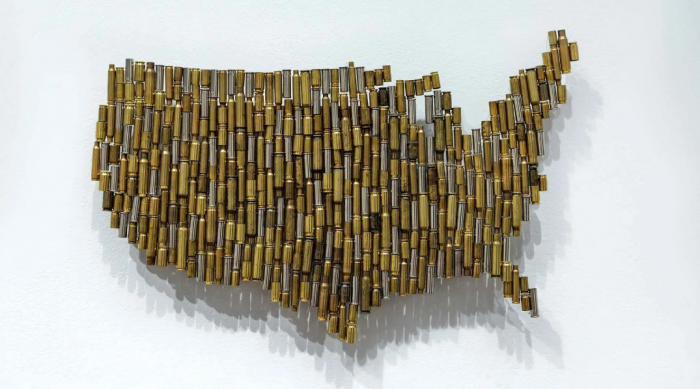
Photo of "Neverending" by Mary Mena—first-place winner of the 2023 Sadat Art for Justice and Peace competition—is by John T. Consoli
Published on Thu, Aug 20, 2026 - 9:36AM