

Recent ECON Graduate Builds AI Tutor, Collaborates with Chilean University
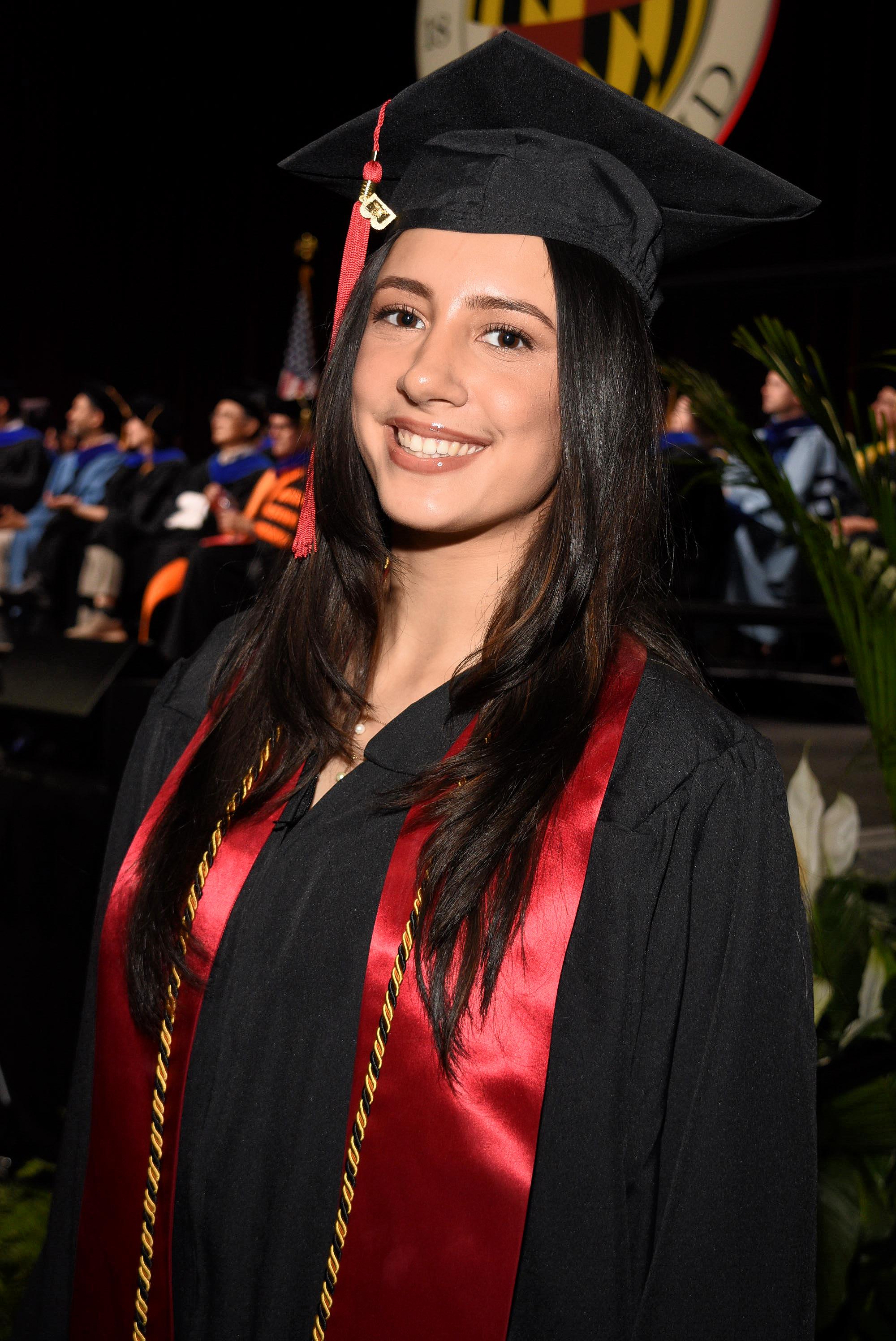
Nil Özdemir graduated in May with a B.S. in economics and a minor in mathematics. Today, she hopes to build on the research she started while she was an undergraduate in the Department of Economics.
While an ECON student, Özdemir’s research interests had focused on topics related to education, especially building stronger school systems that help students learn and acquire skills more effectively. As a senior, she conducted a study exploring how AI affects student performance, giving her the chance to connect the possibilities of AI and education.
Given that AI is the topic of much public debate, especially its usage in the academic community, Özdemir said that choosing the topic of the study was easy. “Finding data I could actually analyze empirically was much harder,” she said.
Ultimately, Özdemir collaborated with academic partners in Chile to test and present her findings.
“I was lucky to be starting this research at a historic moment in technological innovation. AI had just become an everyday academic companion for students, myself included, and public opinion about it was fracturing in real time,” Özdemir said. “This gave me the chance to work on a question almost nobody had published on yet.”
While Özdemir struggled with the ambitious idea initially, her advisor, Professor of Economics Sergio Urzúa, helped her to sharpen her research plan and guided her toward potential research collaborators.
“After a lot of planning, iterations, reiterations, and cold emails, I connected with a partner university in Santiago, Chile, and two professors teaching an introductory economics course there,” Özdemir said.
That collaboration led to Özdemir designing a study platform built around an AI tutor partnering with a Canada-based EduTech company, Xpanse Canada Inc. The AI tutor was trained on the course material and prompted to teach using the Socratic method.
Once UMD’s Institutional Review Board and partner Universidad del Desarrollo’s ethics committee approved the study, Özdemir ran a randomized controlled trial measuring the AI tutor’s marginal effect on exam performance.
“The study was a useful pilot in proving that this kind of Randomized Controlled Trial [RCT] is feasible, though the sample size was too small to give a definitive answer on impact,” Özdemir said. “But I came away having learned an enormous amount: website design, prompting, how to build research relationships, and student study behaviors. All of it was a big step towards a much larger research agenda.”
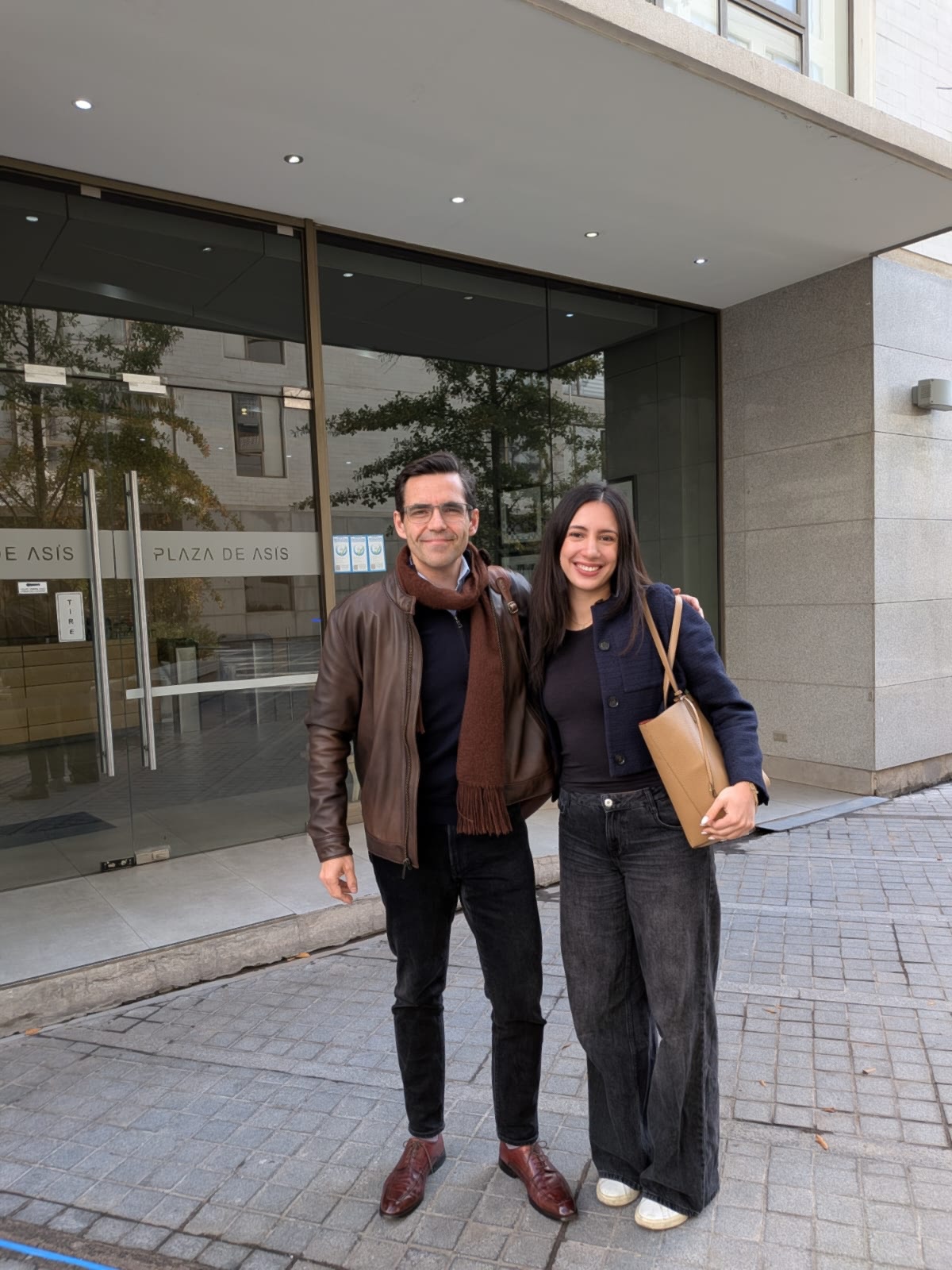
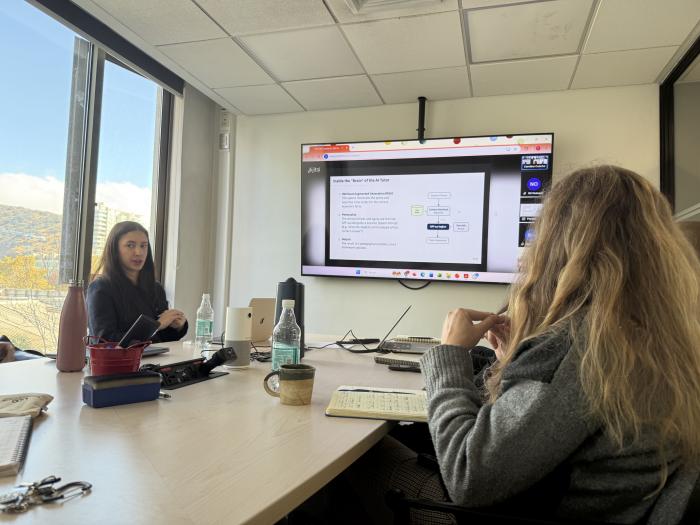
Urzúa said the project was especially impressive for an undergraduate student. Urzúa traveled to Chile to watch Özdemir present her research.
“Nil presented the project in Chile, in front of faculty and grad students, while also helping expand potential collaborations with researchers there. The interest generated by her findings sparked broader discussions within the university about the possibility of scaling the intervention into a larger institutional implementation,” Urzúa said. “In my 15 years at UMD, I have rarely encountered an undergraduate research project with this level of practical and institutional potential.”
Özdemir’s travel to Santiago, Chile was made possible, in part, by support from the BSOS Undergraduate Experience Fund, the Honors College Research Grant, and the Sujon Guha Memorial Award for Academic Excellence and Outstanding Leadership. This financial support and the encouragement that Özdemir received from Urzúa and from her new collaborators in Chile brought the power of connections into sharp focus.
“Throughout my research experience, I learned how much interpersonal relationships matter in pursuing a research agenda. Reaching out about potential collaborations and staying engaged with research communities is essential for discussing, refining, and advancing ideas with feedback from academic peers,” Özdemir said.
One of her favorite parts of the trip was meeting collaborating professors in person and running a survey on student interest in AI tools like the one she had built.
“Another highlight was presenting my RCT to faculty in the government department and fielding their questions. It was especially exciting for me to have my advisor Professor Urzúa join the meeting in person,” Özdemir said. “The whole trip sharpened my interest in global technology and education research and gave me the confidence to be bolder about my own research instincts.”
Now, after graduation, Özdemir wants to keep researching how humans and AI systems interact and shape each other.
“This project left me with more questions than answers, which is how I know I did it right. I’m hoping to pursue a graduate degree in human-AI interaction, AI philosophy, or cognitive science: work that feeds directly into building AI systems that are safer, more reliable, and more useful to the people who rely on them,” Özdemir said.
Photo of Nil Özdemir in cap and gown, and photo of Özdemir with Professor Urzúa, courtesy of Nil Özdemir. Photo of Özdemir presenting in Chile courtesy of Urzúa.
Published on Mon, Jul 20, 2026 - 11:40AM