

Samira Anderson Honored as Distinguished Scholar-Teacher
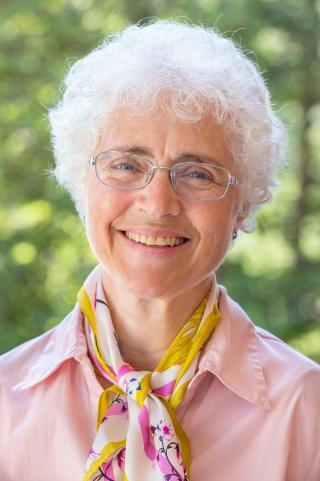
The College of Behavioral and Social Sciences warmly congratulates Professor Samira Anderson, chair of the Department of Hearing and Speech Sciences (HESP), on being named as a Distinguished Scholar-Teacher (DST). Each year, the university recognizes up to six tenured faculty members for this honor. Honorees are selected by a committee of former DSTs.
As a DST, Anderson will receive $5,000 to support scholarly and instructional activities. She will also deliver a public address as part of a DST lecture series.
Anderson said the honor, in some ways, recognizes a leap of faith that she took in her career path.
“After twenty-six years of clinical practice in audiology, I made the decision to pursue a research path. I was motivated to teach future generations of audiologists and hearing scientists, thinking that I could broaden my impact on individuals experiencing hearing difficulties. I was also motivated to investigate and develop better ways of assessing and managing these hearing difficulties,” Anderson said. “It was a big risk for me to abandon my clinical practice and during the first years, I wasn’t certain that I made the right decision. But I enjoyed what I was doing, and gradually became more sure of my choice. This honor is further confirmation that my career change was right for me.”
Today, Anderson’s work not only provides experience and guidance for undergraduate and graduate students, it addresses problems experienced by many older adults, and the people who care for them.
Anderson’s research explores the neural mechanisms underlying hearing difficulties in older listeners. She directs the Hearing Brain Lab, which she founded because she was interested in what happens to the speech signal as it ascends the auditory system to the brain and how neural processing of the speech signal affects speech understanding, especially in challenging environments.
“I believe that this information is beneficial in the clinic to help patients understand why they have trouble hearing, especially in noise,” Anderson said. “I also want to provide patients with better solutions, and have conducted studies to determine if different forms of auditory training can improve how the brain processes speech.”
Anderson joined HESP in 2013, in addition to her work in her lab and in HESP, she is a faculty member in the Program in Neuroscience and Cognitive Science, and is affiliated with the Center for Comparative and Evolutionary Biology of Hearing, and the Language Science Center.
Looking ahead, Anderson is excited about the project her lab will be starting in August, which involves colleagues in Germany. They will be conducting a clinical trial with devices that combine hearing aid amplification with short periods of auditory stimulation, to determine if they can improve speech in noise understanding and cognitive abilities.
“The BSOS community is so proud of Samira’s groundbreaking work, and the lifelong impact she has on her students and fellow researchers,” BSOS Dean Susan Rivera said. “It is only fitting that Samira be named as a Distinguished Scholar-Teacher; she brings the best of both of those roles to our university, and beyond.”
Published on Tue, Jun 16, 2026 - 11:31AM