
Sociologists Use the Arts to Communicate Research Findings
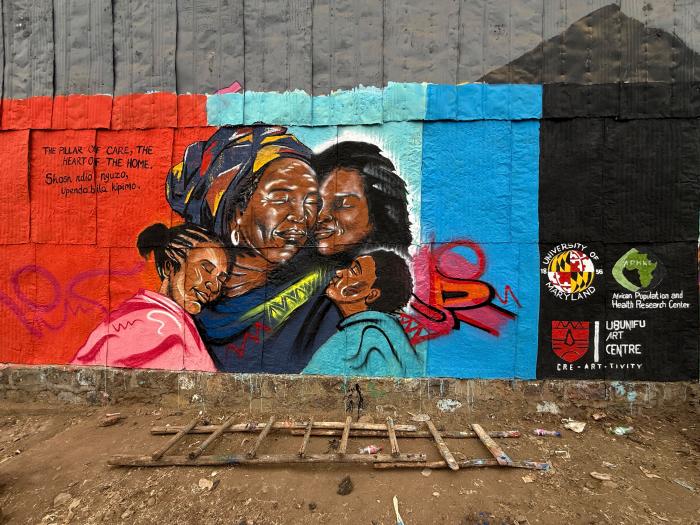
Professor Sangeetha Madhavan and doctoral student Katia Destine worked with Kenyan artists to convey findings related to marriage, kinship study
Professor Sangeetha Madhavan was named an Arts for All Faculty Fellow at the beginning of the 2026-2027 academic year. But, she got an early start on the arts-based research project the fellowship challenges its honorees to develop on a 2026 summer trip to Kenya with Katia Destine, a second-year doctoral student in the Department of Sociology (SOCY).
The trip came after Madhavan, who has joint appointments in SOCY and the Department of African American and Africana Studies, had completed five years of data collection for the Jamaa na Afya ya Mtoto (JAMO) project. The project — funded by the Eunice Kennedy Shriver National Institute of Child Health and Human Development — aimed to understand the complex relationships among marriage, kinship and children’s well-being in low-income communities in Nairobi, Kenya. Despite infant and child mortality rates decreasing in Kenya overall, the urban health advantage is disappearing in capital cities such as Nairobi, driven by poor health outcomes in low-income communities.
Madhavan also wanted to know how community members perceive the challenges facing their communities.
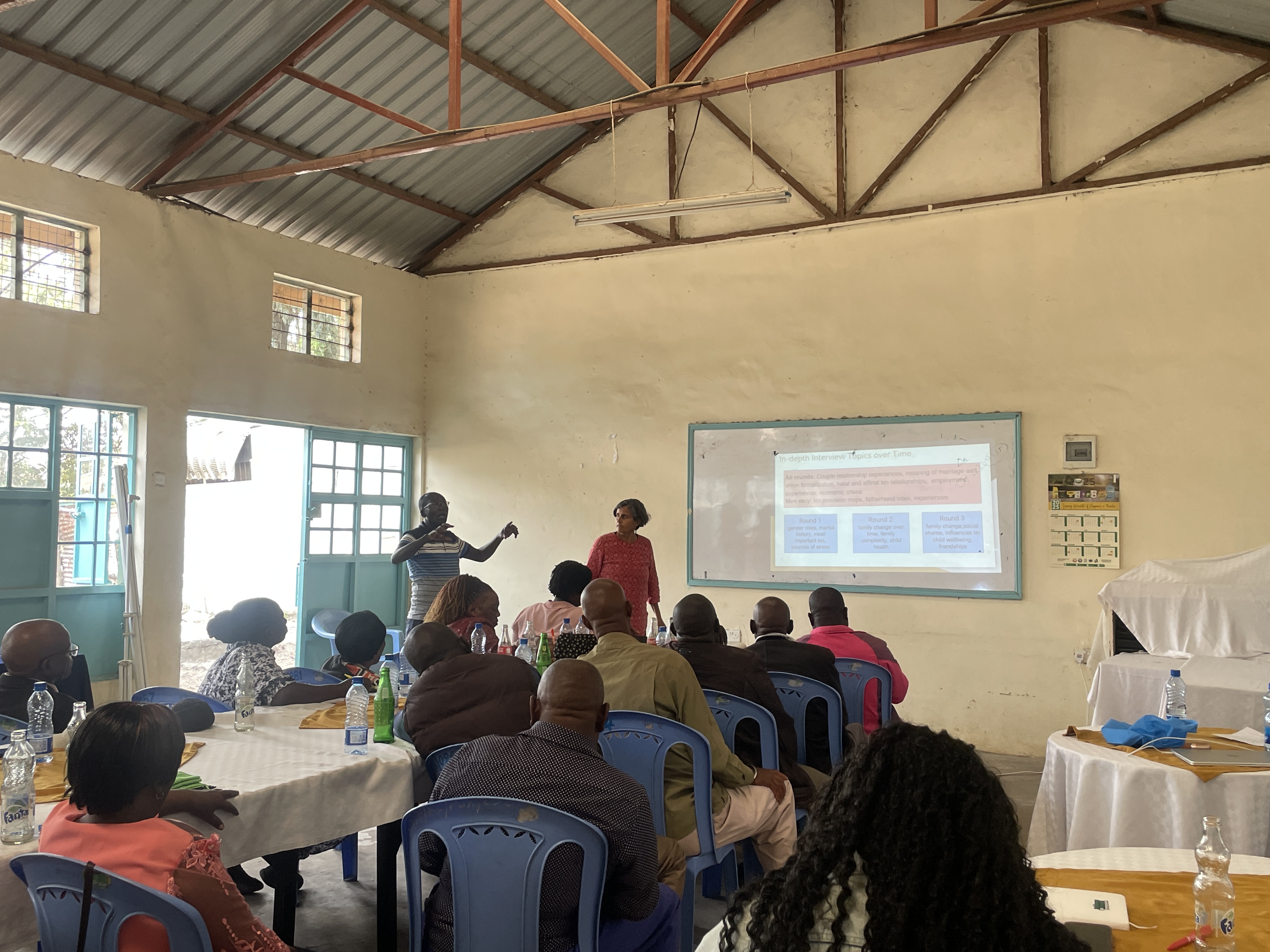
“As we were analyzing the data and submitting papers to academic journals, I wanted to come up with more creative and effective ways of translating and disseminating these findings to the communities in which we conducted the research because the study participants are not going to be reading academic articles,” explained Madhavan.
As Madhavan was wrestling with possible next steps, two “fortuitous” things happened: Arts for All — a campuswide, presidential initiative at the University of Maryland that partners the arts with the sciences, technology and other disciplines to develop new and reimagined curricular, research and experiential offerings — put out a call for people to apply to their fellowship program, and Destine arrived at UMD to begin her doctoral program.
“For my undergraduate honors thesis, I interviewed Black working class musicians in Central Florida about how they deal with both racial and economic disparities in the music industry,” said Destine, who graduated from the University of Central Florida with a degree in interdisciplinary studies. “When I came to UMD, I wanted to continue that line of work, and then I met Sangeetha and learned about how she wanted to find an innovative and artistic way of engaging with the people who were part of her study, so that they have access to the research too.”
Madhavan and Destine spent one week in Nairobi together, leading inception meetings and co-creation workshops with two arts organizations: Beyond Initiative for Social Concern (BISC), a Gen Z theater troupe, and the Ubunifu Arts Center.
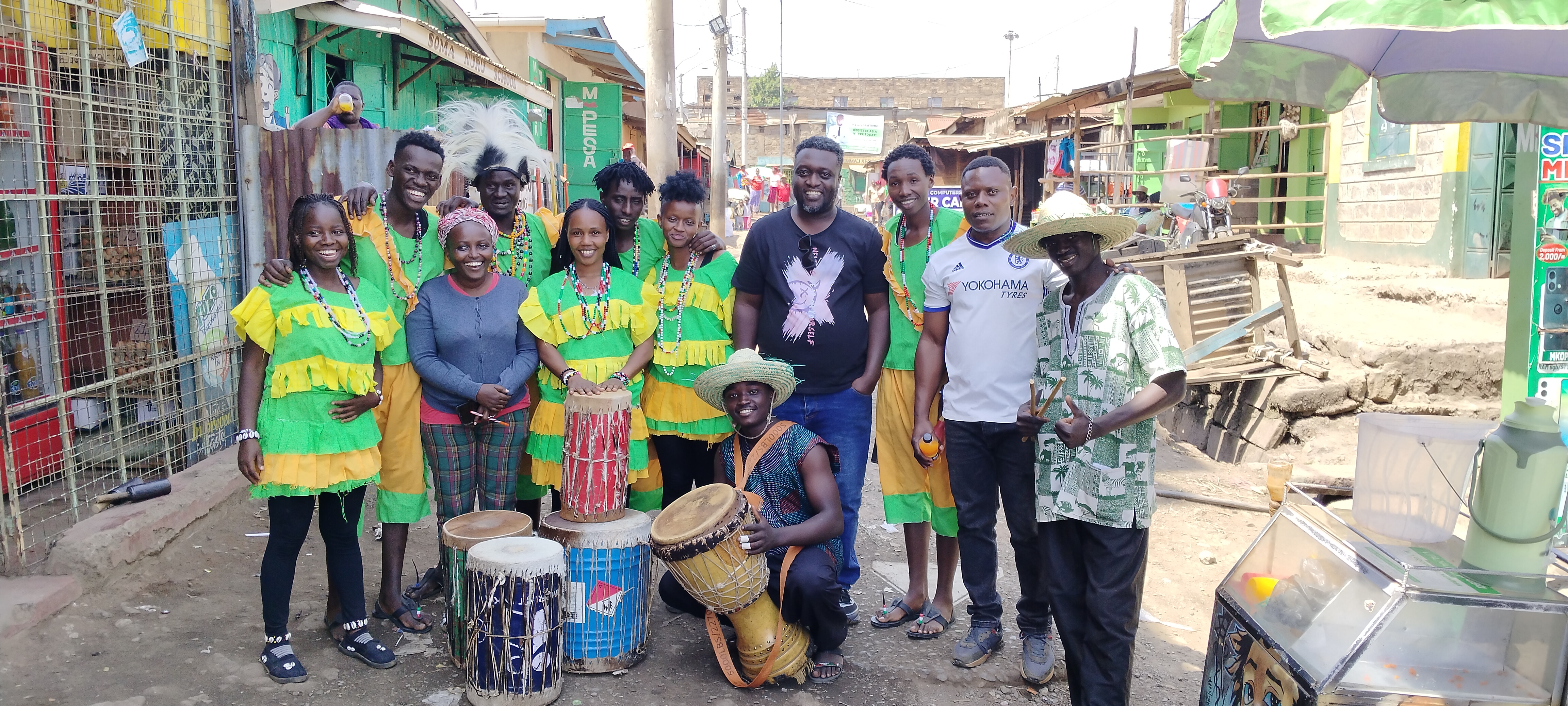
With a $2,000 grant from Arts for All, supplemented with a grant from the National Science Foundation’s Graduate Research Fellowship Program and an award from the Sonalde Desai Current-Use Research Fund, Destine spent an additional three weeks in Nairobi supporting the artists’ creative interpretation of data specifically on the marriage process — also known as “union formalization” — relationship quality, and the role of grandmothers and fathers.
Ultimately, these conversations resulted in BISC performing street theater during high-traffic times, and the Ubunifu Arts Center creating murals and leading drum-based musical performances.

“The groups we worked with were really good at not only understanding the scientific findings, but knowing where their community is at, and how to properly translate the research to them,” said Destine. “One of the things we want to do is break down this idea that academia exists in a silo, and that academia can only push information out to the community. The opposite is true; we were the ones going in and learning new information, and they were the ones leading the charge and helping us understand how we can engage with their communities better.”
Destine is currently using content analysis to understand how union formalization and relationship quality are reflected in the work produced by the two arts organizations, and compare it to what is revealed in the JAMO survey data. In the process, she seeks to identify what community art reveals about marriage and relationships that the survey does not capture, and vice versa. She also plans to develop a publication for a peer-reviewed academic journal, which she hopes will inspire other social scientists to consider ways to incorporate art into their work.
Madhavan is seeking additional ways to increase the visibility of the Kenyan artwork and artists, as well as increase the use of the survey data now publically available through the Inter-university Consortium for Political and Social Research. Another project Madhavan is considering involves working with young, Black men in the DMV to co-create provision maps similar to an effort she led with men in Kenya.
“The role of men and fathers as providers is an issue that is important here in the U.S., in Kenya, and all over the world,” said Madhavan. “We had fathers in Kenya draw out a map of all the people in their lives that they support in whatever way — financial support, emotional support, etc. — and we saw that it gets quite complicated very quickly. Even if they may not be contributing steady, high levels of income, these men are really important and matter for families, marriages, children, all sorts of people.”
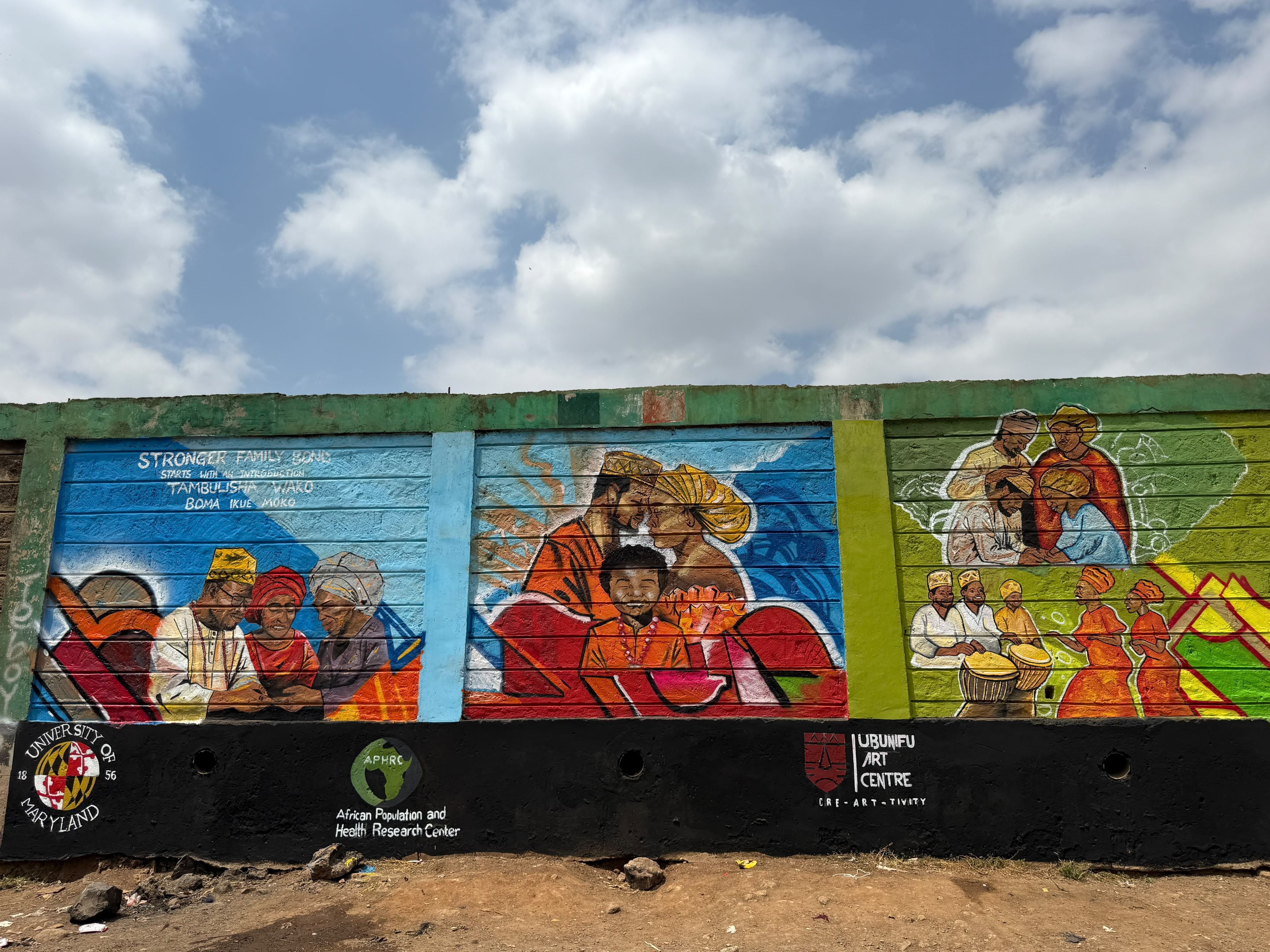
Madhavan hopes that doing so will create an opportunity for viewers to more clearly see connections between different global contexts.
“When it comes to JAMO, one of the biggest takeaways is that these issues are not unique to Kenya. When we think about families and marriage, there is this deficit framework, and what I hope JAMO findings will do is show that getting married isn’t the only way to make a family that’s good for children and others. The role of kin is important, but many people still need a social safety net, whether they are in Kenya or the U.S. So, what are the most beneficial ways to strengthen families that really focus on strengthening the resources, rather than imposing this ‘you need to do this and that’s the only way this is going to work’ kind of idea?” said Madhavan. “This is a really exciting, new direction in my world, and I think it would be really great if we could advance that.”
Published on Wed, Nov 11, 2026 - 12:23PM