

UMD Hearing and Speech Clinic Now Offering Otology Services
Patients Seen in College Park Twice a Month through New Partnership with School of Medicine
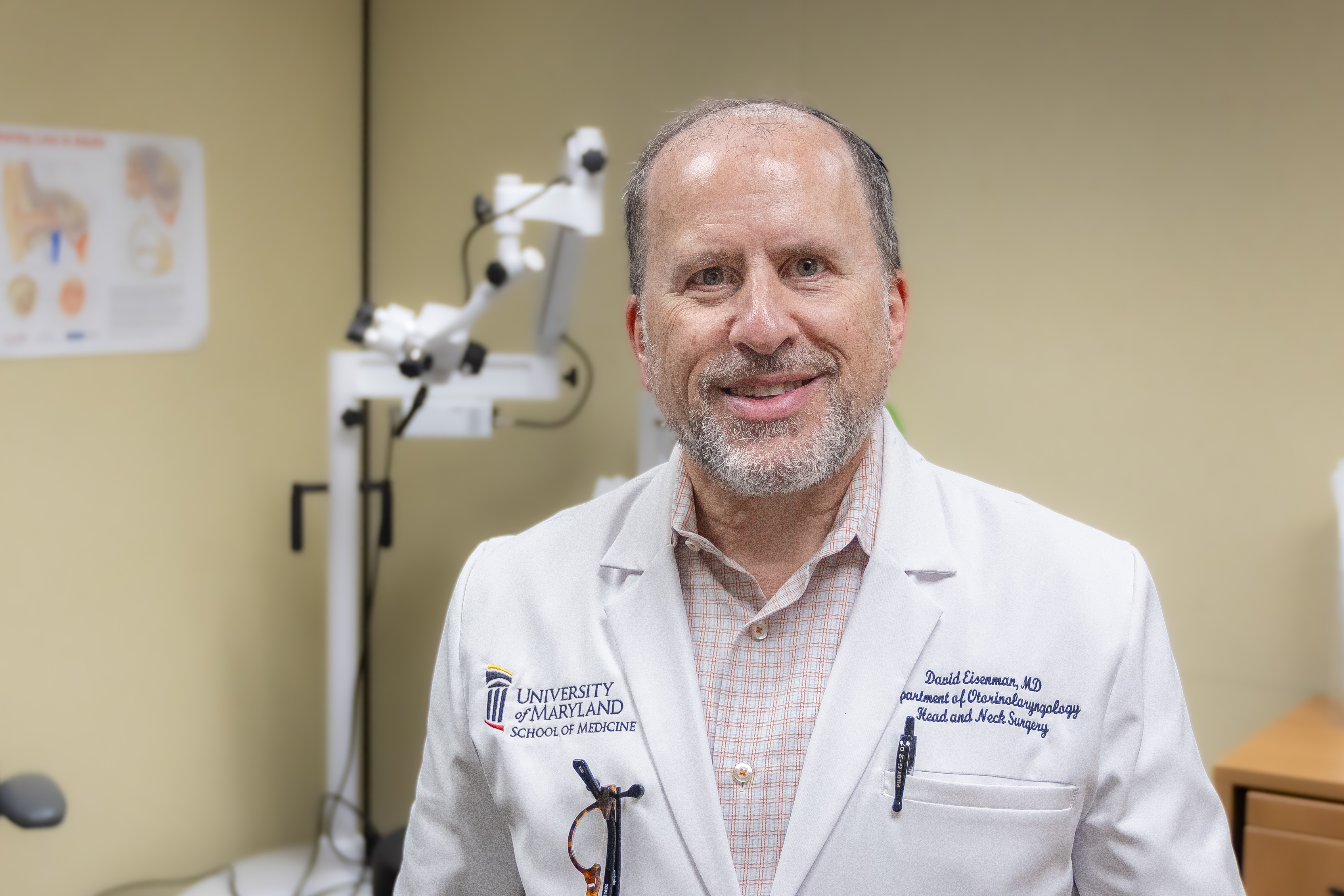
The University of Maryland’s Hearing and Speech Clinic now offers additional services for cochlear implant users and individuals struggling with sudden hearing loss, balance problems, vertigo, and more thanks to a new partnership with Dr. David Eisenman, the director of the Otology, Neurotology and Skull Base Surgery Program at the University of Maryland School of Medicine.
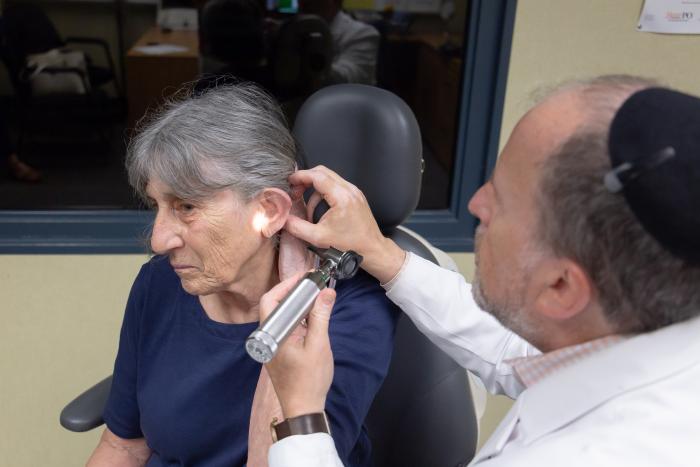
Twice per month, Dr. Eisenman travels from his office at the University of Maryland Medical Center in Baltimore to College Park to see patients in need of otology services. Compared to an otolaryngologist or ear, nose and throat (ENT) doctor, an otologist like Dr. Eisenman specializes specifically in issues stemming from how the brain and the ear work together so that someone can hear.
“Ideally anyone coming for otology services has already seen an ENT and is referred by them, but that’s not always the case,” Dr. Eisenman explained. “Issues that cause sudden hearing problems, chronic ear infections, ringing or buzzing in ear, vertigo, or facial nerve paralysis can can all be evaluated by a general ENT, but many of those things need specialty care that very few ENTs can do, like performing surgeries of the middle ear or mastoid, installing a cochlear implant, removing tumors of the ear and skull base, or treating CSF leaks, where fluid from around the brain can leak into the ear.”
This specialty care that Dr. Eisenman provides can be hard to find, often requiring many Marylanders—locally, and even from the Eastern Shore of Maryland—to travel to Baltimore to receive care. For individuals in need of cochlear implants in particular, that may mean traveling to Baltimore multiple times, for a pre-operation appointment, surgery, and a post-surgery follow-up appointment.
“For cochlear implant patients, the biggest barrier to care is the number of pre-op appointments they have to go to. They still have to go to their primary care doctor before surgery, sometimes they will need an EKG, and so we wanted to try to help people get two or three of those appointments done in one visit, especially for those people coming from the Eastern Shore who stay overnight in College Park and come to see us the next morning,” Nicole Nguyen, a clinical professor in the Department of Hearing and Speech Sciences and the Hearing and Speech Clinic’s director of clinical audiology, said.
Some patients, like Ray Hubbard, come to the clinic with a hearing issue, and once the clinic staff determines that they are a candidate for a cochlear implant, they get referred to Dr. Eisenman for cochlear implant surgery. Others work with Dr. Eisenman and his team in Baltimore for pre- to post-operative care, then come to College Park to have their cochlear implant “activated,” or turned on and fine-tuned to the patient’s preferred sound settings, by the clinic’s audiologists.
Kathleen Bright, a Beltsville, Md. resident who graduated from UMD with a degree in home economics in 1971, recently saved herself a trip to Baltimore by seeing Dr. Eisenman in College Park for her post-op appointment. She will have her cochlear implant activation with the clinic’s audiologists in College Park, too.
A.J. Bowman, a 10-year-old from Sykesville, Maryland who recently received a cochlear implant, was able to knock out two appointments in one visit.
“We were incredibly thrilled and relieved to learn that our son, A.J., could have both his audiology and neurotology appointments on the same day and in the same location. Between work and our children’s activities, coordinating time off for multiple medical appointments can be stressful,” said A.J.’s mom, Jessica. “I also think seeing Dr. Eisenman in the familiar, welcoming clinic environment, rather than in a hospital setting, helped A.J. feel more comfortable as he prepared for surgery. Having both specialties available in one place made the entire process easier, less stressful, and more reassuring for our family.”
Dr. Eisenman noted that since April—when he first started coming to the College Park clinic—he’s seen cochlear implant patients, and many other kinds of cases, too.
“Cochlear implant patients are not a majority, but a plurality. I’ve seen patients who have chronic ear infections, patients who need various kinds of hearing restoration surgeries that don’t involve cochlear implants, and patients with cholesteatomas, which are benign growths in the ear that can be very aggressive and cause serious problems,” Dr. Eisenman said.
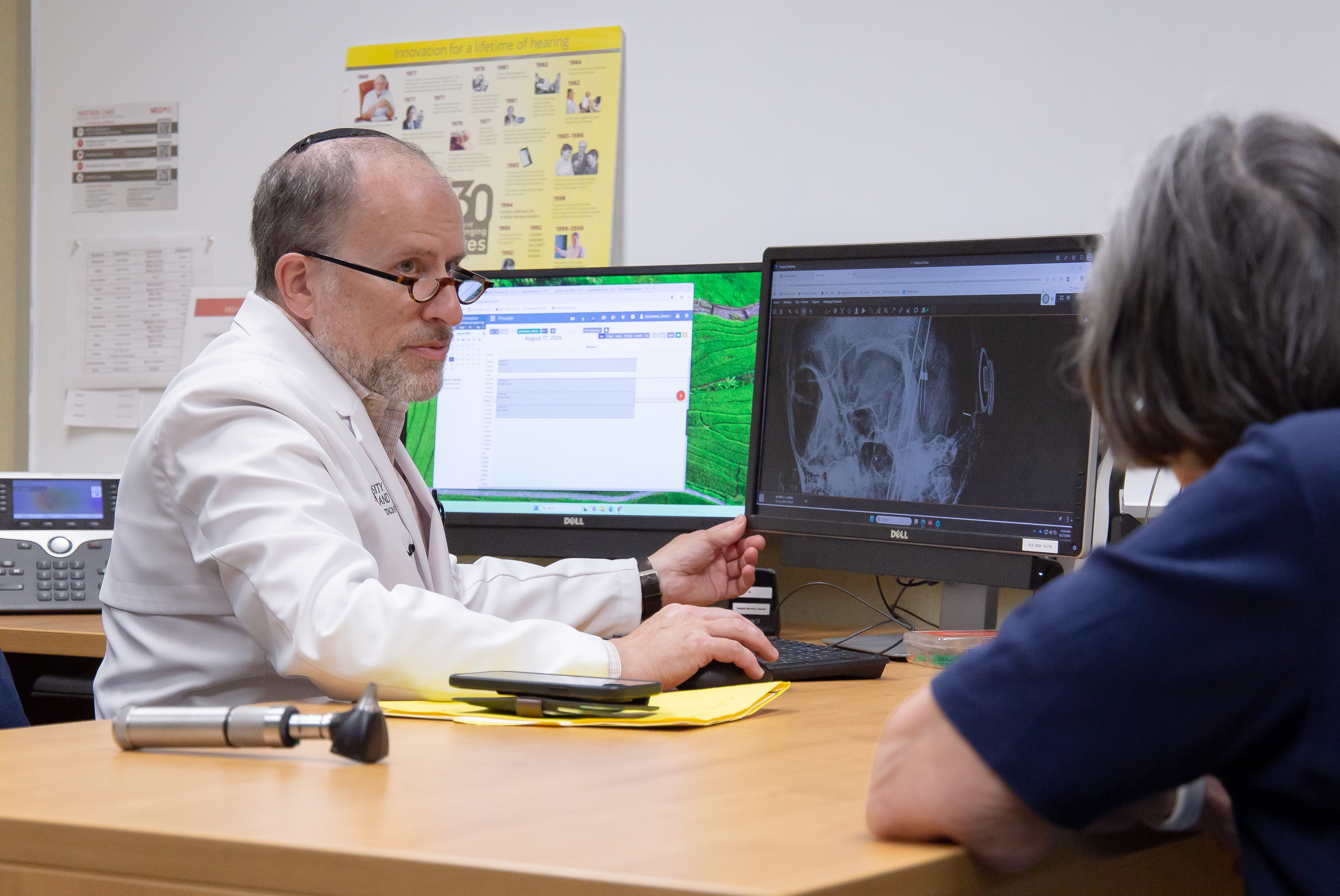
Dr. Eisenman has mostly been seeing patients living in the Metro D.C. area, given that he started visiting the Hearing and Speech Clinic at the end of the academic year. However, he does expect to see some UMCP students in his office, for issues including noise-induced hearing loss, vertigo, and vestibular migraines, which cause severe spells of spinning with nausea or vomiting, and feelings of motion sickness or unsteadiness.
“We sometimes see that students who had a lot of ear infections when they were young seem to grow out of them and do well, and then they go to college and start to have different but related problems,” Dr. Eisenman said. “It is increasingly recognized now that the most common cause of vertigo is migraines, even if you are not having a headache, and college-aged women are one of the most susceptible populations for migraines.”
Patients who come to see Dr. Eisenman in the Hearing and Speech Clinic can expect to do a hearing test with the clinic’s audiology team, talk about their medical history, undergo an exam, and either receive an order for imaging studies or go over recent imaging results. In some sudden hearing loss cases, Dr. Eisenman can help restore hearing with steroids if the patient is treated within three days. In some migraine-related cases, Dr. Eisenman may make a referral to a neurologist.
“We can get people started on treatment and get them moving in the right direction,” he said.
Being able to help campus students, faculty, staff, and individuals in the College Park and surrounding communities with these issues is just one of the reasons why Nguyen is grateful for this partnership with Dr. Eisenman.
“I think the diversity of the patients, and the different diagnostics for student learning is what I am most excited about,” Nguyen said. “Having such an expert on ear and balance disorders so accessible to the local community is really great, and I hope people take advantage of that.”
To make an appointment with Dr. Eisenman, call 410-328-6866.
Published on Mon, Aug 31, 2026 - 2:49PM