



UMD Study: Satellites Overlook Widespread Carbon Accumulation in Mature Forests
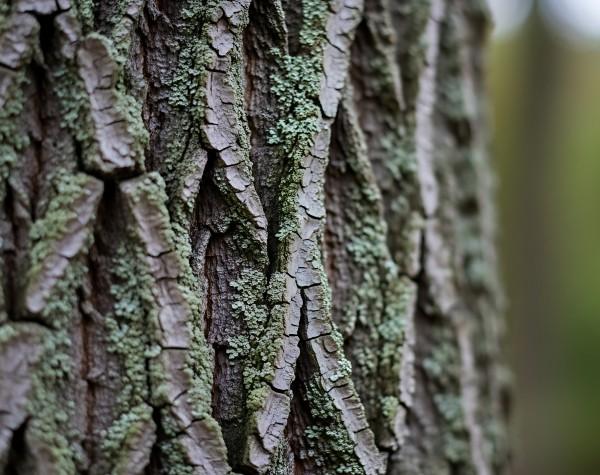
New research identifies a blind spot in satellite observations that systematically underestimates continued carbon accumulation in mature forests.
Mature forests across the United States continue accumulating significant amounts of carbon long after widely used satellite observations suggest their growth has slowed, according to a new study by researchers in the University of Maryland’s Department of Geographical Sciences and the Global Ecology Lab. Published in Nature Ecology & Evolution, the findings highlight an important gap in how scientists monitor the terrestrial carbon sinks.
The study was led by Lei Ma, an assistant research professor, with co-authors Professor George Hurtt, Professor Ralph Dubayah and Assistant Research Professor Matheus Henrique Nunes, as well as collaborators from several United States and international institutions.
Forests play a critical role in slowing climate change by removing carbon dioxide from the atmosphere and storing it in trees. Accurately measuring how much carbon forests remove from the atmosphere is essential for understanding their role in slowing climate change and improving climate model predictions. However, many recent studies based primarily on satellite-derived estimates of forest biomass change have suggested that the land carbon sink may be weaker than previously thought. The new study shows that part of this apparent decline may instead reflect a limitation of current satellite observations, which systematically underestimate continued carbon accumulation in mature forests.
To investigate this discrepancy, the researchers combined repeated airborne lidar measurements, U.S. Forest Service Forest Inventory and Analysis (FIA) data, and observations from NASA’s Global Ecosystem Dynamics Investigation (GEDI). Together, these independent datasets revealed widespread increases in forest structure and biomass across the contiguous United States. In contrast, widely used satellite biomass products captured little additional biomass increase once forests exceeded approximately 16 meters (52 feet) in canopy height.
"The forests haven't stopped growing," said Ma, lead author of the study. "Once forests reach canopy closure, the satellite signals become much less responsive even though trees continue accumulating biomass and storing carbon. That means a substantial portion of the carbon absorbed by mature forests can go undetected."
Because mature forests account for approximately 72% of forest area across the contiguous United States, overlooking their continued growth can lead to underestimates of terrestrial carbon uptake and complicate the evaluation of Earth system models. The findings suggest that satellite-derived biomass changes should be interpreted cautiously when estimating the strength of the forest carbon sink.
"Satellite observations remain indispensable for monitoring forests around the world, but no single observation can capture every aspect of forest change," Ma said. "The future of forest carbon monitoring lies in integrating complementary observations. Airborne and spaceborne lidar missions such as GEDI, ICESat-2, LVIS, and the upcoming NASA Earth Dynamics Geodetic Explorer (EDGE), together with long-term forest inventory networks, will provide a much more complete picture of how forests are changing and how much carbon they continue to remove from the atmosphere."
This research was supported by the NASA GEDI Competing Science Team, NASA's Early Career Investigator Program in Earth Science, NASA's Carbon Monitoring System and Schmidt Sciences through the CLARiTy project, part of the Virtual Institute for the Carbon Cycle.
Image: Close up texture of mature tree bark covered with lichen in natural forest setting by Tajwid via Adobe Stock
This article by Renata Johnson originally appeared on the Department of Geographical Sciences' website.
Published on Mon, Aug 3, 2026 - 9:42AM