

Violence Reduction Center Adds Deputy Director
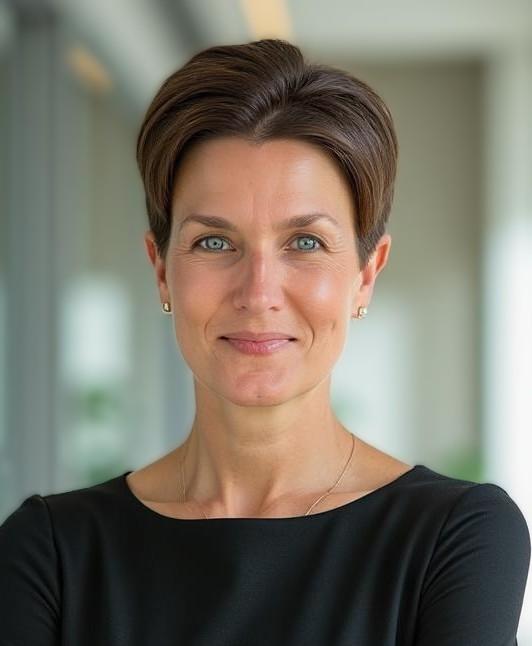
Amber Parker Will Be Helping Partner Cities Deploy Their Violence Reduction Initiatives
The Center for the Study and Practice of Violence Reduction at the University of Maryland—also known as the Violence Reduction Center (VRC)—recently added a new expert to its team: Deputy Director Amber Parker.
Parker brings to the VRC more than 25 years of experience working in various federal, state, and local crime reduction capacities. Most recently, Parker served as a senior policy advisor for the U.S. Department of Justice’s Office of Justice Programs, where she was responsible for directing multiple national initiatives aimed at increasing community safety. One such effort was helping American cities implement the Ten Essential Actions outlined in the Violent Crime Reduction Roadmap, which VRC Founding Director Thomas Abt led the development of when he was the chair of the Council on Criminal Justice Violent Crime Working Group.
“We're lucky to have Amber join the team,” said Abt. “She's been a leader in criminal justice, juvenile justice, and specifically on violence reduction for years. I'm confident that Amber, working closely with our partners, can help us advance the VRC's life-saving mission.”
After earning her bachelor’s degree in sociology from the University of Iowa, Parker—who says she was always interested in criminal justice, but didn’t want to take the law route—went on to work as residential counselor and delinquency prevention therapist serving youths who had been involved with the juvenile justice system.
“I was only 21 or 22 working with kids who were 16 or 17, and I was seeing these young people with these incredible talents and assets who had lived a very damaged existence that led to them being involved with the system,” recalled Parker. “It really grounded my understanding of where my passion was, and grew my empathy for people who find themselves entangled in the system.”
Parker continued to work in the juvenile justice space for the next 15 years, going on to work within school districts, and eventually for the City of Las Cruces, New Mexico as the Juvenile Diversion Program Supervisor. In that role, Parker developed multiple youth-serving programs that led to a very low youth recidivism rate, a very high program graduation rate, and, thus, state and national attention.
When Parker’s family moved to Nebraska, she started working toward her Master of Justice Management degree, as well as working to improve pieces of the juvenile justice system on an even larger scale by taking a county-level job. Parker’s work helped to reduce school-based arrests in Omaha Public Schools by 50%, before making what she calls a “natural transition” to the City of Omaha’s Mayor’s Office. There, Parker worked with elected officials, law enforcement, and community partners to secure funding for multiple public safety initiatives, and help see those initiatives through.
One of the initiatives that Parker worked on in Omaha, Project Safe Neighborhoods, once again attracted national attention, so much so that the Department of Justice recruited Parker and the Omaha team to share their work at the Violent Crime Reduction Summit.
Throughout all of these career experiences, Parker says that she observed firsthand “the same things the VRC preaches.”
“Generally, it’s a misconception that there is this wild youth violent crime problem. The research shows that it is not young people who are creating the majority of lethal violence,” explained Parker. “With regard to violence, it is a small number of people in a very small number of places that are creating the largest proportion of the problem. So, when you use targeted strategies and reach those folks who really are the trigger pullers, there’s an immediate impact on community safety.”
Among other responsibilities, in her new role with the VRC, Parker will be working alongside Abt to help the VRC’s partner cities carry out their own targeted approaches to reducing violence in their communities.
“What gets me excited and gets me up in the morning is the direct interactions that we have with the cities that we work with,” Parker said. “Because at the end of the day, it’s about saving lives. And what’s better than that?”
Published on Thu, Jan 29, 2026 - 7:52AM