

Keith Carney, GVPT ’83
Keith Carney ’83 is reacquainting himself with the Department of Government and Politics, plus helping advance research out of Ireland via his latest business venture
Keith Carney, an alumnus of the University of Maryland Department of Government and Politics (GVPT), recently returned to the College Park campus to meet with GVPT faculty and learn about their work — in what turned out to be a familiar space.
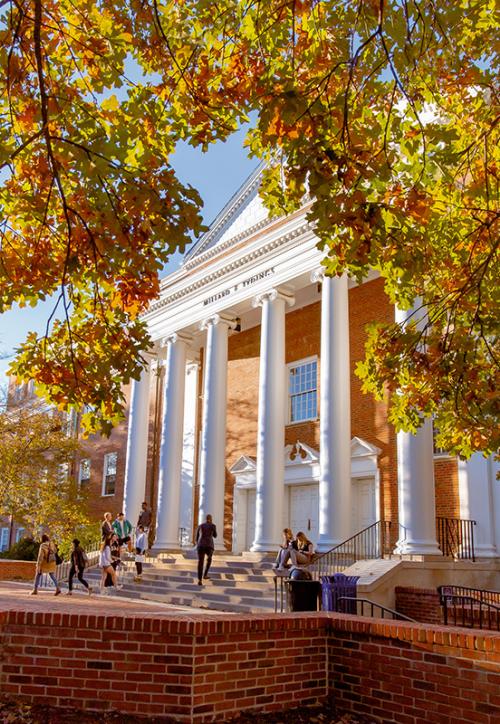
GVPT Professor and Center for Democracy and Civic Engagement Director Michael Hanmer’s office, tucked into a corner on the first floor of Tydings Hall, was once a computer center for the College of Behavioral and Social Sciences. Carney ran that computer center for three years during his time as an undergraduate.
“It was so surreal walking in there,” said Carney, who put himself through college by working at the computer center, bussing tables for a campus sorority, and working the door at the now-shuttered Rendezvous Inn, aka “The ’Vous.”
Undergraduate Years
Using computers was always one of Carney’s greatest interests, so much so that he intended to major in computer science at UMD, which the Poughkeepsie, New York native wanted to attend in part because he “wanted to get out of the snow and the cold.”
However, Carney ultimately decided to major in his other field of interest, government and politics, and minor in computer science after realizing that UMD’s computer science program required you to learn how to build a computer.
“I was a big proponent of using computers as opposed to building them,” explained Carney. “The nice part about UMD is that it has so much to offer, so I didn’t have to stay on that computer science major path for too long. As a minor, I learned how to design systems instead of build circuitry.”
That computer science training wound up coming in handy, and crossing over into his major work rather seamlessly.
“I had a government and politics professor, Don Weinberg, who would lecture in the evenings for his class on labor relations,” recalled Carney. “Don was the Director of the D.C. Office of Labor Relations for then-Washington, D.C. Mayor Marion Barry. One day, I asked him what computers he was using, and I offered to, as an intern, build a computer system for his office. He agreed, and it worked out great — I was studying quantitative methods, and he was doing a lot of salary and benefits surveys — and he then ended up hiring me after I graduated to run the computer system and be support.”
Taking a Leap on Capitol Hill
In the mid-80s, Carney went on to design computer systems for the U.S. Senate. It was there that the groundwork for his first company, FedNet, was laid.
“We were designing the systems, designing the applications, training staff, and one of the systems I worked on was the Congressional record, which is what is spoken on the floor of the Senate and House, so I learned all of the ins and outs,” said Carney.
After leaving the Senate to briefly consult with phone companies on automation, when the internet started to take off, Carney saw an opportunity and decided to get in on the action.
“What the internet was originally used for in the news world was publishing. It was very good for big publishers like LexisNexis and Westlaw and anyone else dealing with government documents because they are so voluminous, because they could charge people $30,000-$40,000 a year to access them on their private network. But the internet opened that information up to everyone at no cost, so I saw that as the opportunity to get into the news business,” said Carney. “The only player at that time was C-SPAN, and they had two cable shows, and their obligation was broadcasting the Senate and House floor when they were in session, and when they weren’t in session they would play back the hearings. No one was covering all the hearings live — there can be 75 hearings in a day — so we saw the opportunity and we wired every hearing room and every media location and we were getting audio of the Senate and House floor, and we were covering 10-15 times what C-SPAN was covering, and no one saw us coming.”
When Carney officially launched FedNet, a credentialed news organization and the leading provider of broadcast coverage and multimedia content of the United States Congress, at a press conference in 1996, they “hit it big” with coverage by The Washington Post, The New York Times, and other major news outlets. Years later, ahead of the impeachment proceedings of former President Bill Clinton, those same outlets wanted FedNet to capture video of the impeachment proceedings for them, and so FedNet officially entered the video world.
A few years after that, Carney harkened back to his computer science days and in 2001 created the first searchable video database of Congress.
“I didn’t like what was available commercially with searchable videos, so with a bunch of brilliant guys from the telecomm world, we developed a database that synced up video that allowed you to put in keywords and member names so that anytime someone spoke or said a keyword, it would alert people and clip the content. So for any floor speeches, members of the speakers’ communications staff would come into our system, edit the in and out, and then post the video on their platforms. We were selling Congress back to Congress,” recalled Carney, who sold the program to Congressional Quarterly in 2007.
Carney is ahead of the curve still today, having hired an AI company five years ago to offer FedNet clients access to fast, accurate written transcripts, too.
Though he admits that it hasn’t always been easy — he said “we became a big target during those first 10 years” — to Carney, it’s all been worth it.
“There still isn’t a day that goes by that I don’t love coming up to the Hill,” said Carney, who currently resides in Alexandria, Va. “The view of the Capitol never gets old.”
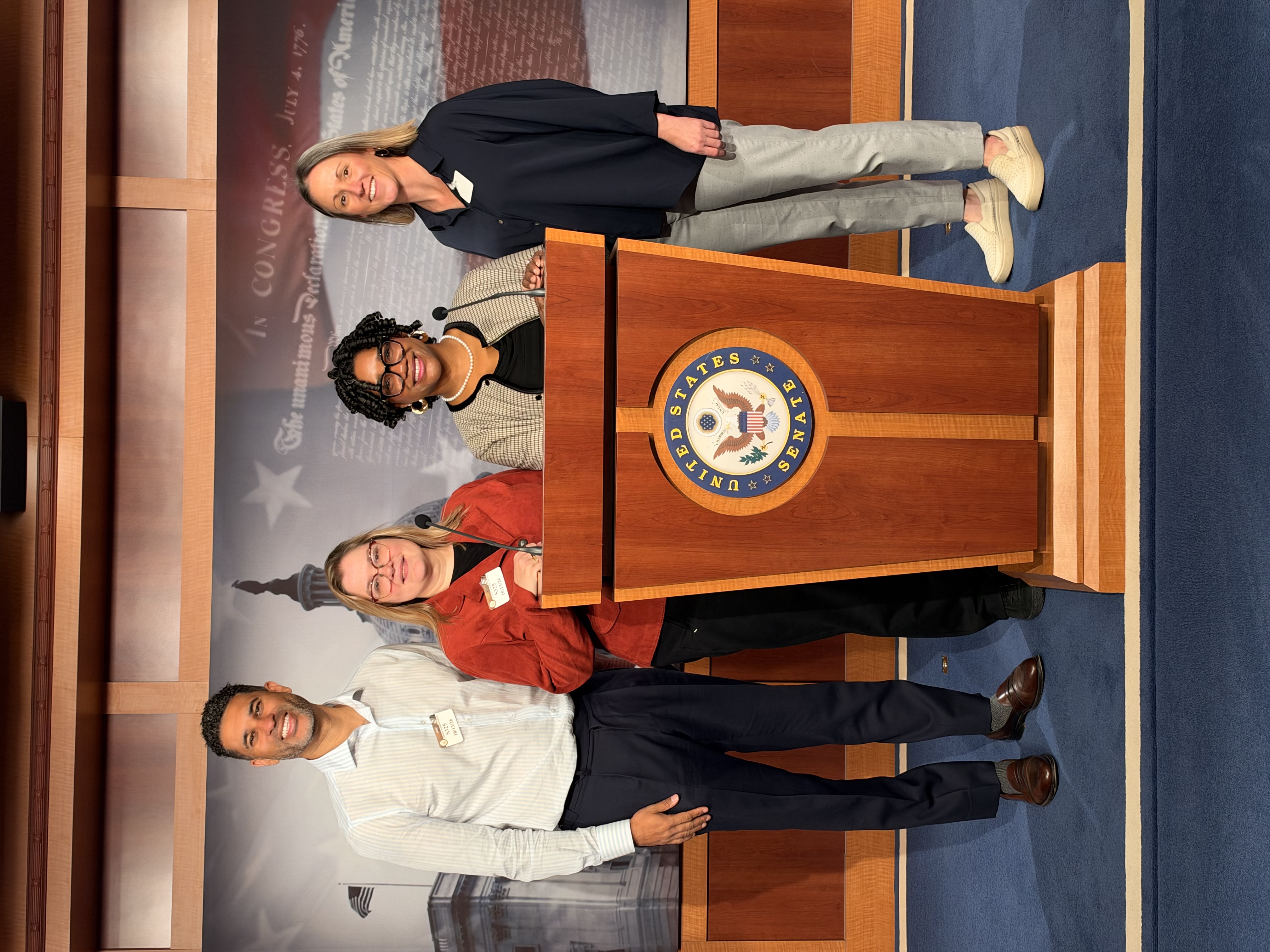
Recently, Carney invited GVPT faculty to visit the area that still hasn’t grown old to him, giving them a behind-the-scenes tour of the Senate building and U.S. Capitol. He hopes to be able to offer this same opportunity to GVPT students, and to have interested students participate in FedNet’s summer internship program.
“I got so much out of my internship with Don Weinberg, including a job, that I want to give back,” said Carney. “And there are three things that I tell my interns I will never ask them to do: get me a cup of coffee, answer my phone, or open my mail. These are things that some interns on the Hill are doing, but I want to immerse people, and I want them to learn.”
A New Venture
In recent years, Carney has also found himself thinking about what he can do to support some of the brightest minds living in the country that his family hailed from generations ago: Ireland.
In January 2026, Carney co-founded Tairseach Gateway Ventures, whose mission is to help guide success for startups in the Irish ecosystem through incubation, acceleration and commercialization.
“Ireland followed a different path in education than the U.S., in that they decided to educate all of their undergraduate students for free, but then there came a time when there weren’t advanced degrees; there weren’t research institutes or extensive labs, so doctoral students were travelling to the U.S. or Europe to get their advanced degrees. Ireland started correcting that by investing heavily in research institutes, and now it has well-educated, English-speaking, brilliant students and they are starting to commercialize,” explained Carney.
For example, the payment platform Stripe was founded by two brothers who grew up outside Limerick, Ireland, and the virtual reality headset company Oculus was originally from a company based in Cork, Ireland.
“There’s a term that the Irish use called ‘notions,’ and it insinuates that you shouldn’t be thinking about success. If you do think about success, in your business or anything else, you are said to ‘have notions’ and are almost shunned, so we are breaking that barrier,” said Carney. “I came from nothing, and I started my business with nothing. But here I am 32 years later, and it’s been a pretty good living. People just need to try; identify what you’re passionate about, use your network and let them help open doors, but don't be afraid to try something, and don’t be afraid to fail. There’s so much opportunity here, especially for Maryland graduates.”

Published - October 29, 2026