Celebrating the Ongoing Legacy of Dr. Kim Nickerson
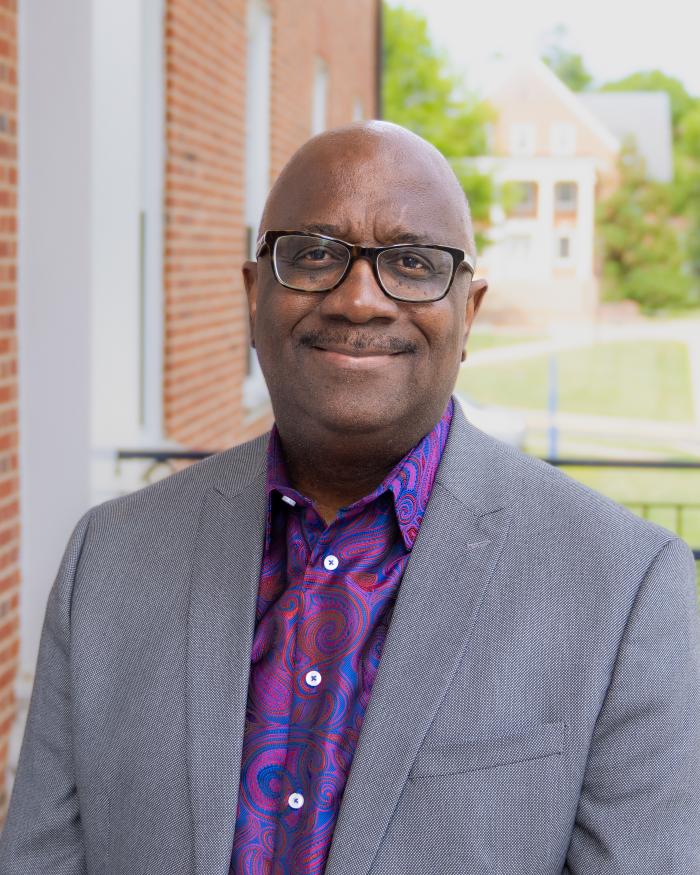
The College of Behavioral and Social Sciences joins with family, friends and colleagues in congratulating Dr. Kim Nickerson on his well-earned retirement. Nickerson, who serves as the college’s assistant dean for diversity, equity, and inclusion—and its diversity officer, EEO partner, and director of the BSOS Summer Research Initiative—has been a steady leader in BSOS for 20 years.
Among his many contributions, Nickerson has built and strengthened pathways that enhanced the educational and career outcomes of BSOS students, faculty and staff, and has steadily fostered an environment that recognizes that we are strongest when we invite the broadest spectrum of individuals to join us in our mission of producing science, educating students and the public, and serving our Maryland community and beyond. He has been a trusted advisor to many BSOS deans and interim deans over the years: Edward Montgomery, Robert Schwab, John Townshend, Gregory Ball, the late Wayne McIntosh, and Susan Rivera.
He also served for six years as one of the charter contributors to the UMD School of Public Health, in the role of assistant dean under the founding dean, Robert Gold.
Nickerson has been an active fixture in science education and training for more than 30 years. He counts being the longest serving director of the BSOS Summer Research Initiative (SRI) at Maryland as one of his proudest career accomplishments. He has more than 30 years of experience creating and administering training programs to guide underrepresented students into science careers across the behavioral and social science disciplines that stretch back to his leadership role at the American Psychological Association, and his early career at the Johns Hopkins University School of Public Health.
During his career, Nickerson also consulted with federal agencies to broaden the participation of underrepresented groups in the sciences, including serving on grant review panels at the National Institutes of Health (NIH), the National Science Foundation (NSF), and the Substance Abuse and Mental Health Services Administration (SAMHSA).
He counts his most important service to federal agencies as the period from 1999 to 2004, when he served as a member of the NIH National Human Genome Research Institute's National Advisory Counsel at the time the full human genome was being sequenced for the first time.
His journey in higher education began in Texas, where he earned his doctorate in clinical psychology from the University of North Texas. He completed his clinical internship at the Medical College of Virginia in Richmond, and his post-doctoral training in community and clinical psychology at the University of Maryland’s Department of Psychology under the mentorship of Dr. Janet E. Helms.
“I love to tell people that I actually began my career here, as a postdoc from 1992 to 1994, in the Department of Psychology,” Nickerson said. “I just fell in love with Maryland. Even back then, I always felt, ‘I could see myself spending my life here.’ And the universe listened to my heart.”
Forging a Career, Serving People and Communities
Before ultimately spending two-thirds of his professional career at Maryland, Nickerson’s distinguished career included serving as director of the American Psychological Association’s Minority Fellowship Program. He also held an appointment as an assistant professor in the Department of Mental Hygiene at the Johns Hopkins Bloomberg School of Public Health.
At Hopkins, Nickerson earned a reputation as a professor who prioritized non-exploitative research related to mental health services, with a focus on serving historically under-served Black communities.
At that time, the Human Genome Project was well underway, and leadership in the United States was under the direction of Dr. Francis Collins, then director of the NIH National Human Genome Research Institute.
“Dr. Collins called me up one day and asked me to come out to the NIH, very early in my career. He wanted someone with a strong ethical sense and a strong commitment to understanding how to include historically underrepresented communities in the Human Genome Project in non-exploitative ways,” Nickerson said. “The next thing I know, I was being invited to serve on the National Advisory Council for the National Human Genome Research Institute. I was the youngest member of that council, and one of the few members of color.”
Nickerson’s service on the council came at an exciting, watershed moment for science.
“I not only served on that council at the time that we were sequencing the complete human genome for the first time, I also served in the capacity of looking at the ethical, legal, and social implications of genomics,” Nickerson said. “When I think of career highlights, one is certainly being one of the very few scientists on Earth to be a member of the National Advisory Council for the National Human Genome Research Institute, at the time the human genome was sequenced for the first time; that can’t be beat.”
During this time, Nickerson visited the White House when President Bill Clinton signed an executive order banning genetic discrimination in the federal workforce.
“I was at the Library of Congress when we actually, officially handed over the draft of the human genome to the Library of Congress,” Nickerson said. “That time in my career was truly one of monumental accomplishments in science.”
Building a Pipeline for Future Researchers
In 2006, Nickerson jumped at the opportunity to return to Maryland, the place where he felt so connected as a postdoc.
When Nickerson was hired on as a member of the dean’s office staff by Montgomery, he led the college’s efforts to recruit students into our graduate training programs and to support their success by becoming the PI of BSOS’s National Science Foundation’s project—a member institution in the Social, Behavioral, and Economic Sciences, Atlantic Coast—Alliance for Graduate Education and the Professoriate (SBE-AGEP). Nickerson also assumed the director’s role of the SRI, assumed the role as the BSOS equity administrator, and began working in other areas such as faculty success and building bridges to other efforts on campus.
He did all of this while also spending six years as an assistant dean in the newly established School of Public Health. His guidance has made a tremendously positive impact.
Established in 1999 by Dr. Robert E. “Bob” Steele, the SRI has enhanced behavioral and social science research and scholarship by providing an opportunity for more diverse students to engage in intensive, summer undergraduate research experiences. Each year, the SRI matches talented scholars from UMD and universities nationwide with our expert BSOS faculty, who assist with research and with helping students to chart their future paths, especially in academia.
SRI scholars conduct research and present posters on broad and impactful topics, from health care access to systemic racism to environmental issues.
SRI alumni can now be found as academics in universities; health and mental health service providers in a multitude of settings; attorneys; doctoral-level researchers; analysts; high-level administrators in governmental agencies, NGOs, private industry, teaching and administration; and a host of other occupations where their diverse perspectives are being used to address some of the world’s great challenges.
Throughout many changes and challenges in the national landscape, including the COVID-19 pandemic, Nickerson has expanded the SRI program significantly. A hallmark of Nickerson’s leadership of the SRI has been to include every BSOS department in the program, every year. Thus, every department now benefits not only from students conducting research in their respective fields, but also from the lifelong connections with SRI scholars that are forged by the one or more faculty members who serve as the scholar’s mentor each summer.
Numerous universities across the nation have conferred with Nickerson and looked to the SRI for guidance on how to establish and expand similar programs, making the SRI a true blueprint for research excellence, and scholar development.
This summer, the program’s 28th cohort welcomed 16 new scholars, bringing the total number of SRI scholars to 342.
“When I reflect on my leadership of the SRI, I am proud to say that—within BSOS, throughout the university, and by inspiring similar programs at other institutions—we did things that are going to make our sciences, our services, and our policies better by training the next generation of people who will bring their unique perspectives to the table,” Nickerson said.
BSOS Program Manager for Graduate Studies and Inclusion Brittney Robinson said that Nickerson has been a trusted mentor and guide throughout her time at Maryland.
“Working alongside Kim has been one of the greatest privileges of my career. He has been much more than a manager—he has been a mentor who has challenged me to grow, encouraged me to pursue my Ph.D., and always believed in my potential, even when I questioned it myself,” Robinson said. “Through his leadership, Kim has shown me the importance of mentorship, and inspired me to fall in love with science and research. That is also reflected in the Summer Research Initiative. Over the past twenty years as director of the program, he has opened doors for hundreds of students, helping them see themselves as scholars and future leaders. His impact will be felt far beyond his retirement, because it lives on in every student and colleague he has inspired. I know I am one of many whose life and career are better because of him.”
In addition to leading the SRI, Nickerson has helped to guide BSOS students in UMD’s McNair Scholars Program, which is designed to prepare students who are primarily from low-income, first generation and traditionally underrepresented groups to pursue doctoral studies.
Sharing Knowledge, Designing Resources
Over the years, Nickerson has been a foundational leader in numerous projects and partnerships on campus designed to promote diversity, inclusion and belonging.
Among these initiatives are the 1856 Project, which is UMD’s chapter of Universities Studying Slavery, a multi-institutional and international consortium dedicated to sharing best practices for reckoning with the role that human bondage has played in establishing and sustaining their institutions.
Among Nickerson’s proudest UMD accomplishments (second, he said, to leading the SRI) is the fact that in 2015 he developed, and has since then led, both the in-person and virtual versions of UMD’s African American History and Landmarks Tour. Through his meticulous and eye-opening research, and his dedication and energy, Nickerson has helped hundreds of visitors and members of the UMD community understand the contributions of African Americans to the founding of our university and to its growth in inclusion and in prestige.
Many of the contributors highlighted in the tour were Marylanders themselves, and also included individuals enslaved by those who founded UMD university when it was established as the Maryland Agricultural College in 1856. Many people highlighted in the tour are giants in American history, including Frederick Douglass, Harriett Tubman, Benjamin Banneker, Thurgood Marshall, and Clarence and Parren Mitchell, and many others. These important people all helped strengthen our American democracy for all.
“I developed this tour on my own time; it is a labor of love,” Nickerson said.
Even after retirement, Nickerson will continue to support and guide the mission and programming of the Bowie State University (BSU)-UMD Social Justice Alliance. In collaboration with 2nd Lieutenant Richard Collins III Foundation, this alliance honors the legacy of BSU alumnus Lt. Collins, who was killed in an act of racially-motivated violence on the UMD campus. This collaboration promotes social justice on BSU’s and UMD’s respective campuses.
Philosophies of Leadership and Success
Over the years, Nickerson has developed several strategies that guide his work, as he strives to—in his words—“make the service, educational, civic, social, and cultural structures created by society work for everyone; especially those who have been historically, and even contemporarily, underserved, ignored, denied, or blocked by our institutions.”
Starting with the basics, Nickerson encourages students, faculty and staff alike to remember “A-E-I-O-U”: Actively Engaging in the Intellectual Opportunities at the University. While this advice might seem straightforward, it’s easy for members of the university community to take their time on campus and their access to resources, lectures, events, arts and social events for granted, especially with busy schedules and the demands of their studies or jobs.
When it comes to ensuring that everyone has access to resources and good outcomes, Nickerson uses a simple formula to hone in on the priorities that lead to success:
Success = Opportunities - (Distractions & Barriers)
“Success equals opportunities, minus the distractions and the barriers,” Nickerson said. “I am proud that in all I have done throughout my career, I’ve tried to identify and remove or reduce barriers and distractions to make the way smoother for those who have the precious opportunity to receive a university education. For those who have shared the great responsibility with me to educate and train the next generation, I have also tried to be a good partner and, in some cases, an inspiration and help to those who come after me.”
One sure way around barriers that Nickerson has found through his own challenges is to “move like water.”
“Water is persistent. Water will adapt to almost any environment or any cause. It will go around, under, or through any challenge, moving steadily and insistently towards its goal,” Nickerson said.
Countless colleagues have benefitted from Nickerson’s philosophies, example, and encouragement. These include Professor Barnet Pavão-Zuckerman, chair of the Department of Anthropology.
“Kim is a treasured mentor and colleague who embodies the ethos of ‘showing up.’ He has shown up for me so many times in both my professional and personal lives. He was present—as a cheerleader, a sounding board, an academic decoder, a gut check, a rock, and a fellow traveler—for all of my professional challenges and triumphs, particularly in my time as department chair,” Pavão-Zuckerman said. “He’s the kind of colleague who asks about your family members by name, shows up for a funeral, and derives genuine delight in your successes. He never misses a chance to publicly heap praise on his colleagues, even when we’re sure we don’t deserve it. For all of this, and so much more, I am so grateful to have found myself in his orbit.”
A Race Well-Run
Reflecting on his career and the road ahead in retirement, Nickerson thinks back on the days when he competed in track and field. Running fast was important, but when it came to relays—working with team mates toward the shared goal of passing the baton at the right time and handing it off with precision was a key driver to success.
“At this moment, I know that it is time to pass the baton to people who have fresh legs for the challenges ahead,” Nickerson said. “I have run my race.”
While Nickerson is looking forward to spending more time with family and friends, and to pursuing his personal interests, especially learning more about the world and our great human diversity and cultures through travel, the BSOS community will feel his absence, and miss his guidance.
“While we will miss Kim’s wisdom and expertise, his impact on our community has been of such magnitude that the effects of his leadership and dedication are now an ingrained part of our college culture,” BSOS Dean Susan Rivera said. “Kim is a champion for our students, faculty, staff and alumni. The programming and policies he has shaped will continue well into the future—not only at Maryland, but at numerous institutions. Kim has helped our college to prioritize excellence in diversity, inclusion, and belonging, in all that we do. We will maintain that legacy even as Kim enjoys his well-earned retirement.”
Published on Tue, Jul 14, 2026 - 2:06PM